Doctors at a district hospital in Maharashtra’s Buldhana have identified a case of fetus in fetu, an extremely rare medical occurrence, in a 32-year-old pregnant woman. The condition, which affects approximately one in 500,000 births, involves the presence of a malformed fetus within the body of its twin.
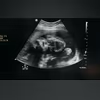
The anomaly was discovered during a routine sonography when the woman, who is 35 weeks pregnant, visited Buldhana District Women's Hospital for a check-up. Dr Prasad Agarwal, an obstetrician and gynaecologist at the hospital, identified the unusual development in the foetus.
"I noticed something abnormal—a normally growing foetus of nearly 35 weeks but with an additional structure containing bones inside its abdomen. This was highly unusual, prompting further examination," said Dr Agarwal to reporters on Tuesday. To confirm the diagnosis, radiologist Dr Shruti Thorat was consulted, and the findings were verified.
What is fetus in fetu?
Fetus in fetu, also referred to as cryptodidymus, is a rare congenital disorder where a malformed parasitic twin is enclosed within the body of a living foetus or child, according to medical journal Science Direct. It occurs due to an abnormal monozygotic twin pregnancy, where one embryo becomes enveloped by the other during early development.
Globally, fewer than 200 such cases have been documented, with only 10 to 15 reported in India, and most diagnoses occur after birth.
The condition commonly presents as an abdominal mass in infancy and may cause symptoms such as pain, an enlarging lump, and a feeling of fullness after eating (early satiety). In most cases, the parasitic twin lacks a fully developed brain (anencephaly) and may have partial limbs or a vertebral column.
Next steps in treatment
Given the complexity of the case, the woman has been referred to a more advanced medical facility in Chhatrapati Sambhajinagar for a safe delivery and further medical intervention. Treatment typically involves surgical removal of the parasitic twin to prevent complications.
Doctors will continue monitoring the pregnancy to ensure both maternal and foetal well-being, as successful outcomes have been reported in similar cases following surgery.

 "Doctors detect rare 'fetus in fetu' case in pregnant woman in Maharashtra")



