
AP Govt making efforts to supply water to benefit farmers: Officials
The statement claimed that the government has made a necessary plan to protect the crops planted by the farmers
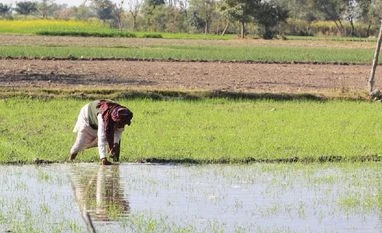 "AP Govt making efforts to supply water to benefit farmers: Officials")
Explore Business Standard
The statement claimed that the government has made a necessary plan to protect the crops planted by the farmers
The Andhra Pradesh Government led by Chief Minister YS Jagan Mohan Reddy has effectively managed the water distribution despite deficit rainfall to benefit the farmers in tail-end areas, but few media publications have been throwing mud against the government by spreading false narratives, a release from the Chief Minister's Office said.
There are over 1.308 million acres of Ayakattu (land depends on canal irrigation) under the Prakasam Barrage. Water was released on July 7 for Kharif 2023-2024 and Paddy planting has been completed in 991,000 acres, it added.
"So far 85.81 TMC of water has been supplied to Ayakattu from Prakasam Barrage. Due to the lack of flow in the Krishna River, water is being taken from the Pattiseema lifting scheme and Pulichintala project," the release stated.
According to the Water Resources Department, "35.93 TMC water from the Pulichintala project, 29.88 TMC water from the Pattiseema scheme, and the remaining 20 TMC water is supplied from inflows to Krishna River from Munneru, Paleru, Keesara etc. This year due to adverse weather conditions, the Krishna River basin has received low rainfall. As a result, there is not enough water in the Srisailam and Nagarjuna Sagar reservoirs to release for the Krishna delta region. The Chief Minister has reviewed the situation with the senior officials of the department from time to time and prepared a contingency plan."
The statement claimed that the government has made a necessary plan to protect the crops planted by the farmers and accordingly, the water in the Pulichintala project and Pattiseema has been used very carefully in a balanced manner.
It said that data from the Water Resources Department reflect that the Pulichintala project had 38 TMC water storage at the beginning of this season.
"About 18 TMCs of water were released for the crops of Krishna Delta till Godavari and the farmers were given water for the crops. As the water reserves in Pulichintala were decreasing, the Pattiseema pumps were switched on and water was supplied to the Krishna delta through the Prakasam barrage from July 21," it said.
The department noted that it was a far-sighted plan implemented by the government headed by Chief Minister Jagan, so they were able to store 19 TMCs of water in Pulichinthala through the Musi River during the rains in Telangana. "If the water had not been previously harnessed from the Pulichintala project, we would have encountered a flood-like situation due to the inflow of water from the Musi River".
"Not only in the Krishna basin but also in the Ayakattu region, the rainfall has been very low this year. The months of August and October recorded less rainfall which is rare. Even in this dire situation where nature is not cooperating, the government has taken planned measures to protect the interests of the farmers and has introduced all the necessary measures to prevent the crop from drying up i.e. Warbandi system (on & off)".
As per the statement, the Warbandi system is also being implemented to keep the crops from drying up given monsoon conditions. "Due to the system, there will be no drain flow in designated areas for a week. In such situations, especially at the end of the canal, farmers use oil engines to sweep away the standing water and save the crops. The Water Resources Department is making all efforts to provide water with the highest priority to the tail-end area where it is needed"
Regarding the Krishna Eastern Delta, the department noted that there is a registered area of 7,36,953 acres out of which 5,30,136 acres are cultivated. So far 52.69 TMC of water has been supplied from Prakasam Barrage. Water is being supplied to Ayakattu by implementing the Warabandi system, as per the statement.
It added that 800 cusecs to 1200 cusecs of water were supplied to the Eluru canal, and currently 1000 cusecs of water are being supplied. "There is no condition of crop drying in Ayakattu. All efforts are being made to provide water to every acre of Ayakattu".
It added that regular reviews are being conducted by introducing a weekday policy to prevent crops from drying up In the presence of water resources department officials and public representatives.
(Only the headline and picture of this report may have been reworked by the Business Standard staff; the rest of the content is auto-generated from a syndicated feed.)
First Published: Oct 29 2023 | 7:05 AM IST


