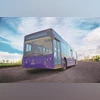
Under the PM e-Bus Sewa-Payment Security Mechanism (PSM) scheme, three states, namely Gujarat, Telangana and Karnataka, have placed requests with the Centre for 15,000 electric buses (e-buses) at a subsidised price. India aims to deploy 50,000 e-buses by 2030, with a focus on nine major cities and seven states — Gujarat, Telangana, Karnataka, Delhi, Maharashtra, Tamil Nadu and West Bengal — under the National Electric Bus Program (NEBP), which was launched in 2022.
Demand from the remaining four states are still awaited, officials said. “We got a demand for 15,000 e-buses from Gujarat, Telangana, and Karnataka under the PSM scheme against our target of 14,000. Delhi is in the process of specifying the numbers, and it will come shortly. However, no demand has come from Maharashtra, Tamil Nadu, and West Bengal,” one of the officials said.
The ministry of heavy industries (MHI) plans to spend about 40 per cent of the ₹10,900 crore PM Electric Drive Revolution in Innovative Vehicle Enhancement (PM E-Drive) scheme towards electrification of public transport. It has allocated ₹4,391 crore to roll out a little over 14,000 e-buses by providing the vehicles at a subsidised price by the end of FY26.
“Now, we are mulling over whether to open a tender for these states and give them (the e-buses) in the first phase, or wait for another month for the remaining states and do it at one go. We will take a call in a week,” the official added.
Convergence Energy Services Limited, a subsidiary of Energy Efficiency Services Limited, is ready with its first tender. As soon as the MHI gives the go-ahead, it will process tenders, another official informed.
Queries sent to spokespeople and secretaries of the aforementioned ministry and authorities remained unanswered till press time.
The MHI is also planning to allow operators to participate in e-bus tender processes, the officials added. This comes at a time when registration of e-buses in the country has been stagnant, and the government is pushing for e-mobility adoption. India sold a total of 3,314 e-buses in the financial year 2024-25 (FY25), down 5.7 per cent year-on-year, according to Vahan portal. This would provide wider access to e-buses across more cities, the official said.
The public sector bus market accounts for only 10 per cent of the overall market, while 90 per cent of the market is private transportation — intercity and intracity. Today, subsidies are largely being provided to the public sector. E-bus registration in FY25 was expected to be higher, but it wasn’t the case because of multiple reasons, said Srihari Mulgund, partner at electric vehicle value chain of EY-Parthenon.
“State transport unions will have to create the infrastructure: depots, charging stations, etc. If there is a delay in that, the rollout of these buses will also get delayed,” Mulgund said.

 "Centre receives demand for 15,000 electric buses from three states")











