An order of the Central Information Commission (CIC) cannot be used to seek a writ from the Supreme Court to bring recognised political parties under the ambit of the Right to Information (RTI) Act, the Centre told the apex court on Tuesday.
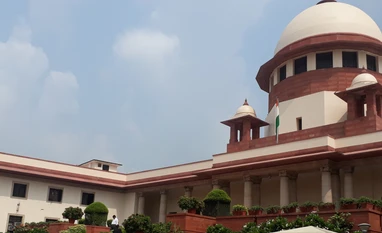
Solicitor General Tushar Mehta made the submission while appearing for the central government before a bench headed by Chief Justice D Y Chandrachud, which is hearing two PILs seeking a direction to bring political parties under the transparency law.
The CIC order cannot be used to seek a writ of mandamus (a judicial order to the government to fulfil official duties) to bring political parties under the RTI, the law officer told the bench, which also comprised Justices J B Pardiwala and Manoj Misra.
Meanwhile, the Communist Party of India (Marxist), represented by lawyer P V Dinesh, said the party has no objection to RTI with regard to ensuring financial transparency.
But there cannot be requests (under RTI) on why a candidate has been selected.. and details on the internal decision making process of a party, the lawyer for the CPI-M said.
Lawyer Prashant Bhushan, appearing for a petitioner NGO, said the CIC had in 2013 passed an order that political parties, which receive benefits like tax exemptions and land from the government, be brought under the RTI for ensuring transparency in the political system.
The court adjourned the hearing on two PILs filed by NGO Association for Democratic Reforms (ADR) and lawyer Ashwini Updhyay to August 1 after taking note of the submission of the solicitor general that Attorney General R Venkataramani, who deals with the case, was travelling and hence unavailable.
Earlier, the top court had segregated the PILs challenging the Electoral Bond Scheme, 2018 from the two PILs demanding bringing political parties within the ambit of the RTI Act.
Updhyay, in his plea, said bringing political parties under RTI will make them accountable and help curb the use of black money in elections.
The petition also sought direction to the Centre to take steps to deal with the menace of corruption and communalisation.
"Declare the political parties, registered under Section 29A of the Representation of the People Act, 1951, a 'Public Authority' under Section 2(h) of the Right to Information Act, 2005, to make them transparent and accountable to the people and curb use of black money in elections," it said.
The PIL sought a direction to the Election Commission of India to ensure compliance with the RTI Act and other laws related to political parties and deregister them if they fail to abide by them.
"Direct the Election Commission to ensure compliance of the Representation of the People Act, Right to Information Act, Income Tax Act and other Election Laws and Rules so far as they relate to Political Parties and de-register them if they fail to comply with the Election Laws and Rules," it said.
Highlighting instances of corruption and indirect funding to political parties, the petition said the central and state governments have allotted land/buildings and other accommodation in prime locations to parties all over the country either free of cost or at concessional rates.
"This amounts to indirect financing of the political parties. Doordarshan allots free airtime to political parties during the elections. This is another instance of indirect financing," it said.
"If closely monitored and totalled, the full amount of public funds spent on Political Parties, would possibly amount to thousands of crores," the petition said.
It also said that a body or entity does not become a political party in the legal sense until the Election Commission under Section 29A of the Representation of the People Act registers it. "Therefore, this registration lends it the colour of Public Authority," the plea said.


 "CIC verdict can't be referred to bring political parties under RTI: Centre")


