Home / India News / Delhi hits 51.9°C 'real feel' temperature: What is it & why does it matter?
Delhi hits 51.9°C 'real feel' temperature: What is it & why does it matter?
The India Meteorological Department issued a red alert as Delhi's real feel temperature touched 51.9 degrees Celsius amid ongoing high humidity and surface heat retention
The India Meteorological Department (IMD) has issued a red alert, warning residents of extreme heat-related health risks.
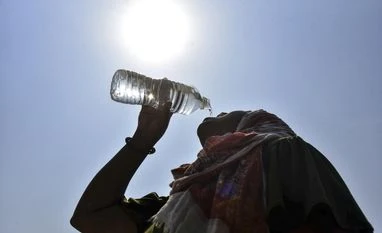
It’s not just hot in Delhi — it feels hotter than ever. The national capital is reeling under a brutal heatwave, with actual temperatures crossing 45 degrees Celsius and the 'real feel' or heat index soaring to a staggering 51.9 degrees Celsius on Wednesday, according to a PTI report. The India Meteorological Department (IMD) has issued a red alert, warning residents of extreme heat-related health risks.
What is ‘real feel’ temperature?
Often referred to as the heat index, the real feel temperature is a calculated value that combines actual air temperature with relative humidity to indicate how hot it feels to the human body. When humidity is high, sweat evaporates less efficiently, making it harder for the body to cool itself — and making the air feel much hotter. In contrast, dry air allows faster evaporation, slightly reducing heat stress.
According to the US National Weather Service, a heat index of 51.9 degrees Celsius falls under the 'extreme danger' category, where heat stroke and exhaustion are very likely with prolonged exposure or physical activity.
While Delhi recorded a peak temperature of 45 degrees Celsius in Ayanagar, the oppressive humidity made it feel far worse — akin to walking into a furnace. This effect is intensified in urban settings due to the urban heat island effect, where concrete and asphalt trap and radiate heat long after sunset.
At 5:30 pm on Wednesday, Ayanagar topped the city’s heat chart at 45 degrees Celsius, followed by Palam (44.5 degrees Celsius), Ridge (43.6 degrees Celsius), Pitampura (43.5 degrees Celsius), Lodi Road (43.4 degrees Celsius), and Safdarjung (43.3 degrees Celsius). Mayur Vihar saw the 'lowest' at 40.9 degrees Celsius.
Is ‘real feel’ temperature officially tracked in India?
Not exactly. The IMD has clarified that while the heat index is a useful indicator, it is not an official metric in India’s weather bulletins. “It fluctuates throughout the day based on temperature and humidity changes, and we do not maintain formal records of it,” an IMD official told PTI.
However, the IMD has begun issuing experimental localised heat index alerts during prolonged heatwaves. Other countries, including the US and Japan, use real feel metrics and Wet Bulb Globe Temperature (WBGT) to assess heat stress, incorporating factors such as solar radiation and wind speed.
According to the IMD, Delhi may see a shift in weather conditions starting Thursday, June 12, with light rain, thunderstorms, and gusty winds (40–50 km/h) expected. From June 13, the red alert may be downgraded to yellow, although heatwave-like conditions may linger.
Daytime highs are likely to remain around 42 degrees Celsius until mid-June. Between June 14 and 17, no official heatwave is forecast, and by June 18, temperatures may dip below 40 degrees Celsius, with light showers predicted on June 16 and 17.
The heat crisis isn’t confined to Delhi. Punjab and Haryana are also under red alerts for June 12–13. The IMD has urged the public, especially children, the elderly, and those with pre-existing health conditions, to stay indoors, stay hydrated, and avoid outdoor activity during peak hours.
Meanwhile, hill stations like Nainital are witnessing an influx of tourists desperate to escape the heat. Reports show severe traffic congestion and overcrowding, making the search for respite far from serene.
While north India battles a heatwave, the southwest monsoon is becoming active in Kerala, Konkan, and Goa, where intense rainfall is expected between June 12 and 15. The IMD forecasts that monsoon rains will reach Himachal Pradesh by June 20 and Punjab by June 27.

 "Delhi hits 51.9°C 'real feel' temperature: What is it & why does it matter?")


