
Delhi riots: Judge recuses from hearing bail pleas of Sharjeel Imam, others
The matters were listed before a division bench headed by Justice Prathiba M Singh after a change in the roster of judges dealing with such cases
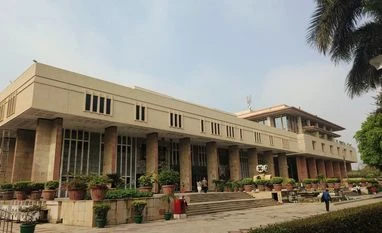 "Delhi riots: Judge recuses from hearing bail pleas of Sharjeel Imam, others")
Explore Business Standard

Associate Sponsors
Co-sponsor
The matters were listed before a division bench headed by Justice Prathiba M Singh after a change in the roster of judges dealing with such cases
Delhi High Court judge Amit Sharma recused himself on Thursday from hearing a batch of bail pleas in a UAPA case linked to an alleged larger conspiracy behind the 2020 communal riots here, including that of student activist Sharjeel Imam.
The matters were listed before a division bench headed by Justice Prathiba M Singh after a change in the roster of judges dealing with such cases.
"Let these matters be listed before another bench of which one of us, Justice Sharma, is not a member, subject to the orders of the acting chief justice, on July 24," Justice Singh ordered.
The other accused persons in the case include Rashtriya Janata Dal's (RJD) youth wing leader and Jamia Millia Islamia student Meeran Haider and Alumni Association of Jamia Millia Islamia president Shifa-ur-Rehman.
Imam, United Against Hate founder Khalid Saifi and several others, including former Jawaharlal Nehru University (JNU) student Umar Khalid, have been booked under the Unlawful Activities (Prevention) Act (UAPA) and provisions of the Indian Penal Code (IPC) for allegedly being the "masterminds" of the February 2020 riots in northeast Delhi that left 53 people dead and more than 700 injured.
The violence had erupted during protests against the Citizenship (Amendment) Act (CAA) and National Register of Citizens (NRC).
On April 11, 2022, the trial court denied bail to Imam, who was arrested in the case on August 25, 2020.
The Delhi Police opposed Imam's bail plea before a bench headed by Justice Suresh Kumar Kait in March on the ground that he mobilised members of the minority community and "propagated" "chakka jam" as a mode of disruption, with "no window for a peaceful protest".
Police have claimed that the protests were part of a conspiracy to trigger violence at the time of the visit of then United States president Donald Trump and that Imam, in his public addresses, had propagated the idea of "chakka jam" as the plan of action to paralyse the government.
(Only the headline and picture of this report may have been reworked by the Business Standard staff; the rest of the content is auto-generated from a syndicated feed.)
First Published: Jul 04 2024 | 5:47 PM IST

