
Doctors advise caution as heatwave conditions remain persistant in Delhi
As the national capital is witnessing a severe rise in temperature and heatwave conditions, doctors warned people of adverse health effects
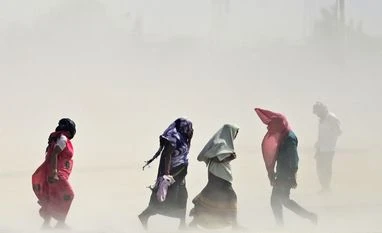 "Doctors advise caution as heatwave conditions remain persistant in Delhi")
WebinarsNew
Deep DiveNew
Explore Business Standard
As the national capital is witnessing a severe rise in temperature and heatwave conditions, doctors warned people of adverse health effects
As the national capital is witnessing a severe rise in temperature and heatwave conditions, doctors on Monday warned people of adverse health effects.
On Sunday, parts of Delhi recorded a maximum temperature of more than 45 degrees Celsius, with Najafgarh recording the highest at 46.3 degrees Celsius, said the India Meteorological Department (IMD).
Heatwave conditions continued in the national capital on Monday with the maximum temperature settling around 43 degrees Celsius, as per the Met Office, which also issued a yellow alert for Delhi.
Heatwaves pose a significant threat to human health, particularly to vulnerable populations such as the elderly, children, and those with pre-existing medical conditions.
"Prolonged exposure to high temperatures can cause heat-related illnesses like heat exhaustion and heatstroke. Additionally, heatwaves can worsen respiratory and cardiovascular conditions, and even lead to increased mortality rates," Dr Rakesh Gupta, Senior Consultant, Internal Medicine, Indraprastha Apollo Hospitals, New Delhi, told IANS.
"Exposure to heat waves could be very harmful for the old people and people with chronic ailments. Direct exposure for a longer time can lead to dehydration and hyperthermia (abnormally high body temperature)," added Dr. Pradeep Kawatra, Consultant - Internal Medicine, Fortis Escorts - Okhla.
Across the world, climate change has made heat waves more common, longer, and hotter. A recent study by Cambridge University showed that about 90 per cent of India is in the "extremely cautious" or "danger" zone from heatwave impact and almost all of Delhi is particularly vulnerable to severe heat wave impacts.
"Climate change is amplifying the frequency and intensity of heatwaves worldwide. Rising global temperatures result in more extreme heat events, posing a growing threat to human health and well-being. The increase in greenhouse gas emissions contributes to the greenhouse effect, trapping heat in the atmosphere and leading to a rise in average temperatures," said Dr Rakesh.
The study showed that heatwaves in India and the Indian subcontinent are becoming recurrent and long-lasting, emphasising the urgent need for mitigation and adaptation strategies to address climate change and its impact on heatwaves.
According to Dr Ajay Kumar Gupta, Associate Director - Internal Medicine, Max Hospital, Vaishali: "Heatwaves can increase headache, giddiness, lead to red patches over the skin, dark coloured or decreased urination, muscle cramps, rapid breathing, and sometimes leading to syncope (fainting episode).
"In severe cases, it will lead to coma with electrolyte imbalance and also chest discomfort. In more severe cases, it can lead to permanent brain damage or even death," he told IANS.
The health experts suggested avoiding direct exposure during the high-temperature time like 12 noon to 4:30 p.m., using an umbrella or any cover and to always keep fully hydrated.
"Use plain water or home made shikanji (a mixture of lemon sugar and salt) in abundance. One should avoid physical hard work and sport during peak hours. Check your urine output if you're working out. Heat waves can harm your skin also so wear loose cotton clothes and avoid tight synthetic garments," Dr. Pradeep told IANS.
Meanwhile, the Met Office has announced that heat wave conditions are likely to abate from May 24, in most parts of India, including Delhi. Officials said a fresh western disturbance could bring relief from the hot weather conditions with light rain and cloudy weather expected for three to four days.
--IANS
rvt/uk/
(Only the headline and picture of this report may have been reworked by the Business Standard staff; the rest of the content is auto-generated from a syndicated feed.)
First Published: May 22 2023 | 8:21 PM IST

