
GRAP Stage 2 curbs kick in across NCR as Delhi's air turns 'very poor'
Under Stage II of GRAP, several curbs and intensified actions include daily mechanical or vacuum sweeping and water sprinkling on identified roads
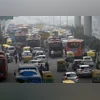 "GRAP Stage 2 curbs kick in across NCR as Delhi's air turns 'very poor'")
Explore Business Standard
Under Stage II of GRAP, several curbs and intensified actions include daily mechanical or vacuum sweeping and water sprinkling on identified roads
The Commission for Air Quality Management (CAQM) has invoked Stage II of the Graded Response Action Plan (GRAP) across Delhi-NCR as the city's air quality slipped into the "very poor" category, with the AQI crossing 300 mark.
The move came after the Sub-Committee on GRAP on Saturday reviewed the worsening pollution levels and forecasts by the India Meteorological Department (IMD) and the Indian Institute of Tropical Meteorology (IITM), which warned of further deterioration in the coming days.
"The AQI of Delhi has shown an increasing trend since morning and has been recorded as 296 at 4 pm and 302 at 7 pm," the CAQM said, directing authorities to implement all Stage II measures with immediate effect, in addition to Stage I actions already in force since October 14.
The Centre's air quality panel also asked all implementing agencies to keep strict vigil, particularly on dust mitigation and to ensure compliance with targeted timelines laid down under the comprehensive policy to curb air pollution in NCR.
Under Stage II of GRAP, several curbs and intensified actions include daily mechanical or vacuum sweeping and water sprinkling on identified roads, preferably before peak traffic hours, to control dust.
Construction and demolition sites face intensified inspections to ensure strict enforcement of dust control measures.
To promote cleaner mobility, the GRAP Stage II mandates augmentation of public transport services through additional CNG and electric buses and increased frequency of metro services, along with differential fare rates to encourage off-peak travel.
Resident welfare associations (RWAs) are required to provide electric heaters to staff such as guards, gardeners and sanitation workers to prevent open burning of biomass and solid waste during winters.
Entry of inter-state buses into Delhi is restricted to those running on CNG, EVs or BS-VI diesel, excluding tourist buses operating under all-India permits.
GRAP categorises air quality into four stages: Stage I (Poor) with AQI between 201 and 300, Stage II (Very Poor) between 301 and 400, Stage III (Severe) between 401 and 450, and Stage IV (Severe Plus) for AQI above 450.
Unfavourable meteorological conditions, combined with vehicular emissions, paddy-straw burning, firecrackers and other local pollution sources, contribute to hazardous air quality levels in Delhi-NCR during winters.
According to doctors, breathing in the polluted air of Delhi is equivalent to the harmful effects of smoking approximately 10 cigarettes a day.
Prolonged exposure to high levels of pollution can cause or exacerbate respiratory problems such as asthma, bronchitis and chronic obstructive pulmonary disease and dramatically raise the risk of cardiovascular disease.
(Only the headline and picture of this report may have been reworked by the Business Standard staff; the rest of the content is auto-generated from a syndicated feed.)
First Published: Oct 19 2025 | 11:14 PM IST


