Home / India News / Shukla conducts 7 Indian experiments aboard ISS during Axiom-4 mission
Shukla conducts 7 Indian experiments aboard ISS during Axiom-4 mission
Group Captain Shubhanshu Shukla, the first Indian on the ISS, led seven Indian-designed experiments during Axiom-4, advancing life sciences for future space travel
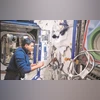
Group Captain Shubhanshu Shukla performing sprouts experiment at International Space Station (Photo: ISRO)
Group Captain Shubhanshu Shukla — the first Indian to visit the International Space Station (ISS) and the second Indian to venture into space after 41 years — has laid the foundation for the country’s ambitious Gaganyaan mission.
Shukla was part of the crew that conducted a host of scientific experiments in space.
Of the total 60 experiments conducted by the Axiom-4 crew at the ISS, seven were designed by Indian researchers and conducted by him.
The basic idea of these researches was to gauge space’s interaction with life.
The Axiom-4 mission was successfully launched from NASA’s Kennedy Space Center in Florida on June 25 and docked with the ISS on June 26.
Here are the seven experiments that Shukla conducted during his stay at the ISS, based on data shared by Axiom 4, and media reports:
1. A major experiment that he conducted was the space microalgae experiment, deploying sample bags and capturing images of the algae strains. These tiny organisms could play a big role in the future of space exploration, offering a sustainable, nutrient-rich food source for long-duration missions.
This was developed by the International Centre for Genetic Engineering & Biotechnology (ICGEB) and the National Institute of Plant Genome Research (NIPGR) of the department of biotechnology (DBT).
2. An experiment developed by the University of Agricultural Sciences, Dharwad (Karnataka), and the Indian Institute of Technology, Dharwad, regarding sprouting salad seeds in space.
3. IISc Bengaluru’s experiment, which is to assess the survival, revival, reproduction, and transcriptome of eutardigrade paramacrobiotus. This Voyager Tardigrades experiment investigated how microscopic creatures survive and reproduce in space. The findings could give insights into the molecular mechanisms of cellular resilience.
4. The Myogenesis experiment, which is a study to uncover the biological pathways behind skeletal muscle degradation in space — a major challenge for astronauts. By identifying these mechanisms, researchers hope to develop targeted therapies that could not only protect space travellers but also aid people suffering from muscle-degenerative diseases on earth. This was developed by the Institute of Stem Cell Science and Regenerative Medicine, under the DBT.
5. An experiment to understand the effects of metabolic supplements on muscle regeneration under microgravity.
6. Tests to analyse human interaction with electronic displays in microgravity developed by the Indian Institute of Science (IISc). This is an experiment by ICGEB to understand the comparative growth and proteomics responses of cyanobacteria on urea and nitrate in microgravity.
7. Tests on growth and yield of food crop seeds, which were developed by the Indian Institute of Space Science and Technology (IIST), Department of Space, and the College of Agriculture, Vellayani, Kerala Agricultural University.

 "Shukla conducts 7 Indian experiments aboard ISS during Axiom-4 mission")


 Connect with us on WhatsApp