
Guidelines issued for component under 'PM-Surya Ghar: Muft Bijli Yojana'
A financial outlay of Rs 800 crore has been allocated for this component, providing Rs 1 crore per selected Model Solar Village, the ministry said
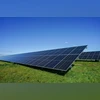 "Guidelines issued for component under 'PM-Surya Ghar: Muft Bijli Yojana'")
WebinarsNew
Deep DiveNew
Explore Business Standard
A financial outlay of Rs 800 crore has been allocated for this component, providing Rs 1 crore per selected Model Solar Village, the ministry said
The government on Monday issued operational guidelines for implementation of 'Model Solar Village' component under PM-Surya Ghar: Muft Bijli Yojana.
Under the scheme component, emphasis has been laid on creating one model solar village per district across India, to promote solar energy adoption and enable village communities to become self-reliant in energy needs, Ministry of New and Renewable Energy (MNRE) said in a statement.
A financial outlay of Rs 800 crore has been allocated for this component, providing Rs 1 crore per selected Model Solar Village, the ministry said.
The scheme guidelines for implementation of Model Solar Village were notified by MNRE on August 9, 2024.
The selection process involves a competitive mode where villages are assessed on their overall distributed renewable energy capacity installed on 6 months after the declaration of the potential candidate by district-level committee (DLC).
As per the guidelines, in order to be considered under the competition mode, a village must be a revenue village with a population size above 5,000 (or 2,000 for special category states).
The implementation of this scheme will be done by State/UT Renewable Energy Development Agency under the supervision of District Level Committee (DLC), ensuring that selected villages transition effectively to solar-powered communities, serving as models for other villages across the country.
Government of India approved the PM-Surya Ghar: Muft Bijli Yojana on February 29, 2024, with the aim to increase the share of solar rooftop capacity and empower residential households to generate their own electricity.
The scheme has an outlay of Rs 75,021 crore and is to be implemented till 2026-27.
(Only the headline and picture of this report may have been reworked by the Business Standard staff; the rest of the content is auto-generated from a syndicated feed.)
First Published: Aug 12 2024 | 3:51 PM IST


 Connect with us on WhatsApp