
House panel flags concerns over lapses in tackling atrocities against SCs
The committee underscored that tackling atrocities against SCs requires "sincere and coordinated" efforts by state governments, supported by central resources
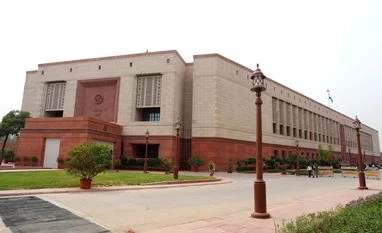 "House panel flags concerns over lapses in tackling atrocities against SCs")
WebinarsNew
Deep DiveNew
Explore Business Standard
The committee underscored that tackling atrocities against SCs requires "sincere and coordinated" efforts by state governments, supported by central resources
A parliamentary panel has raised concerns over the failure of several states to establish the necessary mechanisms to effectively address cases of atrocities against Scheduled Castes (SCs).
Highlighting persistent systemic gaps, the Standing Committee on Social Justice and Empowerment recommended that the central government should actively pursue the state governments to implement and strengthen the machinery required under the Protection of Civil Rights Act, 1955, and the Scheduled Castes and Scheduled Tribes (Prevention of Atrocities) Act, 1989.
In its report tabled in Lok Sabha on Wednesday, the committee noted that despite the absence of financial constraints at the central level, many states were not utilising available funds or taking necessary actions to address these issues.
The committee underscored that tackling atrocities against SCs requires "sincere and coordinated" efforts by state governments, supported by central resources.
The report also emphasised broader challenges in the implementation of welfare schemes under the Department of Social Justice and Empowerment. Significant allocations under key programmes like the Post-Matric Scholarship Scheme for SCs and the National Action Plan for Mechanised Sanitation Ecosystem (NAMASTE) remained underutilised, with bottlenecks such as incomplete documentation, errors in Aadhaar seeding and delays in states releasing their share of funds.
The panel urged more stringent monitoring mechanisms, including regular reviews by senior officials and the organisation of state-level workshops to address operational gaps.
States like Madhya Pradesh, Rajasthan, Bihar and Odisha were singled out for consistently lagging in fund utilisation and achieving implementation targets.
To ensure accountability, the committee called for the central government to impose stricter conditions on non-performing states, urging them to submit accurate and timely proposals to unlock central funding.
It highlighted the importance of cooperative federalism, where states must actively contribute their share of resources for the smooth execution of centrally-sponsored schemes.
The panel also pointed out the need for improving outreach and awareness about welfare programmes.
Many eligible beneficiaries, it noted, remain unaware of their entitlements due to inadequate publicity. The committee proposed scaling up information, education and communication (IEC) campaigns and recommended field visits by senior officials to ensure better implementation.
Additionally, the report highlighted the uneven execution of programmes for marginalised groups, such as the SMILE initiative for transgender persons and beggars and the SHREYAS scheme for SC students pursuing higher education.
It called for expanding the reach of these schemes while addressing procedural delays, such as those affecting free coaching and fellowship programs.
Concerns were also raised over the lack of measurable goals for certain schemes, such as the Pradhan Mantri Adarsh Gram Yojana and the Venture Capital Fund for SCs and OBCs.
The committee stressed that clear benchmarks and annual targets are critical for evaluating their success and recommended increased training and health insurance coverage for sanitation workers under the NAMASTE programme.
While acknowledging the challenges posed by the demand-driven nature of many schemes, the committee expressed optimism that with better planning, enhanced accountability and closer collaboration between central and state governments, the Rs 13,000.20 crore allocated for 2024-25 could be effectively utilised to benefit marginalised communities across India.
(Only the headline and picture of this report may have been reworked by the Business Standard staff; the rest of the content is auto-generated from a syndicated feed.)
First Published: Dec 18 2024 | 4:47 PM IST


 Connect with us on WhatsApp