The report was released by the Indian Institutes of Technology (IIT) Guwahati and Mandi, in collaboration with the Centre for Study of Science, Technology and Policy (CSTEP), Bengaluru
The report has flagged that 91 districts were identified with "very high" drought risk and 188 districts faced "high" drought risk. | Representative Photo: PTI
2 min read Last Updated : Dec 14 2024 | 3:55 PM IST
At least 11 districts, including Patna, Alappuzha and Kendrapara, are at a "very high" risk for both floods and droughts, necessitating immediate intervention, according to a climate risk assessment report compiled by two IITs.
The report was released by the Indian Institutes of Technology (IIT) Guwahati and Mandi, in collaboration with the Centre for Study of Science, Technology and Policy (CSTEP), Bengaluru.
According to the report titled "District-Level Climate Risk Assessment for India: Mapping Flood and Drought Risks Using IPCC Framework", 51 districts in India face "very high" flood risk, with 118 more categorised as "high" risk.
Vulnerable regions include Assam, Bihar, Uttar Pradesh, West Bengal, Gujarat, Odisha, and Jammu and Kashmir.
The report has flagged that 91 districts were identified with "very high" drought risk and 188 districts faced "high" drought risk, primarily in Bihar, Assam, Jharkhand, Odisha and Maharashtra.
Alarmingly, 11 districts, including Patna (Bihar), Alappuzha (Kerala) and Kendrapara (Odisha), are at a "very high" risk for both floods and droughts, necessitating immediate interventions, the report said.
"India's agrarian society is deeply dependent on the monsoon, making the challenges posed by climate change, such as droughts and excessive rainfall, increasingly critical. This report, a collaboration between DST, SDC, provides a comprehensive risk assessment for over 600 districts, offering invaluable insights for effective mitigation strategies," said Devendra Jalihal, the IIT-Guwahati director.
The study integrated climatic hazards, exposure and vulnerability to offer a comprehensive view of district-level risks to aid in disaster risk reduction and highlight the direct impact on people and livelihoods, paving the way for data-driven adaptation planning.
"Climate change is one of the most formidable challenges of our time, impacting agriculture, livelihoods, and every aspect of life. No single entity can address this alone -- it requires collective efforts and innovative frameworks. Through this report, we take a significant step towards identifying vulnerabilities, assessing sensitivity and addressing challenges faced by local communities at risk," said Anita Gupta, head of scientific divisions in the Department of Science and Technology.
"Translating these findings into on-ground actions is essential, and the insights must reach every stakeholder at both national and state levels. This is just the beginning, as India moves forward with a balanced adaptation and mitigation strategy to achieve a cleaner, greener and climate-resilient future. Together, we will fast-track our goals for a Viksit Bharat and a Net Zero Bharat by 2047," Gupta added.
(Only the headline and picture of this report may have been reworked by the Business Standard staff; the rest of the content is auto-generated from a syndicated feed.)


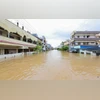 "IIT report flags flood, drought risk in 11 Bihar, Kerala, Odisha districts")

