
India should not be seen as 3rd or 4th-largest GHG emitter: Bhupender Yadav
In contrast, the per capita emissions of the combined 17 per cent population in developed countries account for 60 per cent of global emissions, he added
 "India should not be seen as 3rd or 4th-largest GHG emitter: Bhupender Yadav")
WebinarsNew
Deep DiveNew
Explore Business Standard
In contrast, the per capita emissions of the combined 17 per cent population in developed countries account for 60 per cent of global emissions, he added
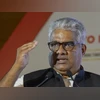
Union Environment Minister Bhupender Yadav on Wednesday said India should not be viewed as the world's third or fourth-largest emitter of greenhouse gases and its low per capita emission should be considered instead.
Addressing a session at the Global Renewable Energy Investors Meet and Expo in Gandhinagar, Gujarat, he said India is home to 17 per cent of the world's population, but its share of global carbon emissions is less than 5 per cent.
In contrast, the per capita emissions of the combined 17 per cent population in developed countries account for 60 per cent of global emissions, he added.
"India should not be viewed as the world's third or fourth-largest emitter of greenhouse gases. While we might rank 'fourth or fifth' in terms of (cumulative) carbon emissions, our per capita emissions are significantly lower than those of developed countries," he said.
When it comes to the use of fossil fuels, developing countries, including India, maintain that they still have significant development needs and therefore the principle of 'common but differentiated responsibilities' should form the basis for negotiations on this issue, the minister said.
This principle acknowledges that while all countries share a responsibility to address climate change, developed countries have historically contributed more to global emissions and have greater financial and technological capacities to address the problem.
Developing nations argue that they have significant development needs, such as poverty alleviation and infrastructure growth, which may require continued use of fossil fuels in the near term.
They advocate for equity and fairness, requesting more time and support to transition to cleaner energy sources, while also ensuring that their developmental needs are met.
India is moving forward with a low-carbon development strategy while taking its national circumstances into account, Yadav said.
(Only the headline and picture of this report may have been reworked by the Business Standard staff; the rest of the content is auto-generated from a syndicated feed.)
First Published: Sep 18 2024 | 12:44 PM IST


 Connect with us on WhatsApp