
Is state empowered to make classification in SCs, STs for quota: SC
The Chinnaiah judgement had held that any sub-classification' of the Scheduled Castes would violate Article 14 (right to equality) of the Constitution
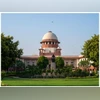 "Is state empowered to make classification in SCs, STs for quota: SC")
WebinarsNew
Deep DiveNew
Explore Business Standard
The Chinnaiah judgement had held that any sub-classification' of the Scheduled Castes would violate Article 14 (right to equality) of the Constitution
The Supreme Court on Tuesday commenced examining a legal question whether a state government is empowered to make a sub-classification in the scheduled castes and scheduled tribes for grant of reservation in admissions and public jobs.
A seven-judge Constitution bench headed by Chief Justice DY Chandrachud is also examining the validity of the Punjab Scheduled Castes and Backward Classes (Reservation in Services) Act, 2006 which provided 50 percent quota and the first preference' to Valmikis' and Mazhabi Sikhs' castes in public jobs inside the quota meant for the Scheduled Castes (SCs).
The bench, also comprising justices BR Gavai, Vikram Nath, Bela M Trivedi, Pankaj Mithal, Manoj Misra and Satish Chandra Mishra, is hearing 23 petitions, including the lead one filed by the Punjab Government challenging the 2010 verdict of the Punjab and Haryana High Court.
The high court had struck down Section 4(5) of the Punjab law, which gave 50 per cent SC quota to Valmikis' and Mazhabi Sikhs', as unconstitutional on grounds, including that the provision violated a five-judge Constitution bench judgement of 2004 of the Supreme Court in the case of EV Chinnaiah vs. State of Andhra Pradesh.
The Chinnaiah judgement had held that any sub-classification' of the Scheduled Castes would violate Article 14 (right to equality) of the Constitution.
The 2004 verdict had stated that only Parliament, and not state legislatures, can exclude castes deemed to be SC from the Presidential List under Article 341 of the Constitution.
The Punjab government, in 2011, had come to the top court assailing the high court's verdict, saying the apex court's 2004 judgement was not applicable to it.
Taking up the plea of the Punjab government, a five-judge bench headed by Justice Arun Mishra (since retired), on August 27, 2020, differed with the Chinnaiah judgement and referred it for adjudication by a larger bench of seven judges or more for an authoritative pronouncement.
We endorse the opinion of a bench of three judges that EV Chinnaiah is required to be revisited by a larger bench; more so, in view of further development and the amendment of the Constitution, which have taken place.
We cannot revisit E V Chinnaiah being bench of coordinate strength. We request the Hon'ble Chief Justice to place the matters before a bench comprising seven judges or more as considered appropriate, the bench had said while referring the case to a larger bench.
In central-government funded higher education institutions, 22.5 percent of available seats are reserved for Scheduled Caste and 7.5 percent for Scheduled Tribe (ST) students.
The same yardstick is applied in the case of public employments as well.
In states like Punjab and Haryana, there is no ST population.
(Only the headline and picture of this report may have been reworked by the Business Standard staff; the rest of the content is auto-generated from a syndicated feed.)
First Published: Feb 06 2024 | 1:34 PM IST


 Connect with us on WhatsApp