
JPC to hold meeting on Waqf Bill, aims for community-focused reforms
The committee met on Monday, inviting officials from the Ministry of Minority Affairs to provide oral evidence regarding the bill
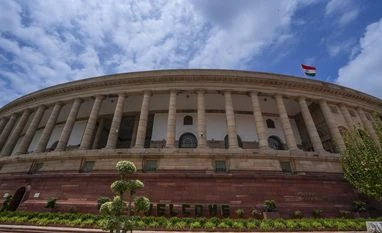 "JPC to hold meeting on Waqf Bill, aims for community-focused reforms")
WebinarsNew
Deep DiveNew
Explore Business Standard
The committee met on Monday, inviting officials from the Ministry of Minority Affairs to provide oral evidence regarding the bill
The Joint Committee of Parliament on the Waqf (Amendment) Bill, 2024, is set to meet at the Parliament Annexe building in New Delhi on Tuesday.
Chaired by BJP MP Jagdambika Pal, the committee aims to reform the Waqf Act to ensure that waqf properties are used for the benefit of the community.
In today's meeting, the committee will hear views and suggestions from representatives of Justice in Reality and Panchasakha Prachar, both based in Cuttack, Odisha. A delegation of five MPs from the Indian Union Muslim League (IUML) will also present their perspectives on the bill.
The committee met on Monday, inviting officials from the Ministry of Minority Affairs to provide oral evidence regarding the bill. This meeting is part of a larger national initiative to address long-standing issues related to the management of waqf properties.
On Monday, discussions during the Joint Parliamentary Committee (JPC) meeting became heated as opposition members questioned the consultative process behind the legislation. They accused the government of introducing the bill for political reasons, alleging it targeted the Muslim community. AIMIM leader Asaduddin Owaisi presented a nearly one-hour critique of the bill, raising concerns about its implications. Trinamool Congress leader Kalyan Banerjee even asked whether Waqf, which exists in the name of Allah, is legally recognized by the state.
Despite the tensions, BJP members defended the bill, arguing that it is necessary for reforming Waqf property management and ensuring transparency. The Waqf (Amendment) Bill, 2024, aims to bring significant reforms, including digitization of records, stricter audits, increased transparency, and legal mechanisms to reclaim illegally occupied waqf properties.
To gather comprehensive input, the Joint Committee will continue to meet with various stakeholders, including government officials, legal experts, Waqf Board members, and community representatives from different states and Union Territories. The committee's work reflects a commitment to improving accountability and efficiency in managing waqf properties for the betterment of society.
(Only the headline and picture of this report may have been reworked by the Business Standard staff; the rest of the content is auto-generated from a syndicated feed.)
First Published: Oct 22 2024 | 11:33 AM IST

