
'Let Centre decide': Delhi HC on plea over Rohingya school admissions
The bench opined courts in no other country decided on matters of citizenship and something that couldn't be done directly, shouldn't be permitted indirectly
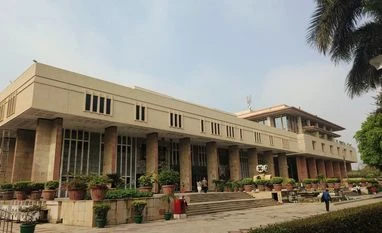 "'Let Centre decide': Delhi HC on plea over Rohingya school admissions")
WebinarsNew
Deep DiveNew
Explore Business Standard
The bench opined courts in no other country decided on matters of citizenship and something that couldn't be done directly, shouldn't be permitted indirectly
The Delhi High Court on Tuesday refused to entertain a plea seeking directions to enrol Rohingya refugee children in local schools, saying it was the Centre's domain.
A bench comprising Chief Justice Manmohan and Justice Tushar Rao Gedela said the matter pertained to "international issues" having ramifications on security and nationality, and therefore, the petitioner should make a representation to the Union Ministry of Home Affairs.
Petitioner NGO, Social Jurist, submitted the Delhi government and the MCD were not granting admissions to these children from Myanmar in their schools for want of an Aadhaar card.
The court said the petitioner's representation would be decided by the authorities as expeditiously as possible.
"Let (Ministry of) Home Affairs (MHA) take a call on this. There are a lot of issues involved. We can't get involved. Let it go to the MHA," the bench said.
The court observed "Rohingyas were foreigners" who hadn't been "officially and legally granted entry into India".
While disposing of the plea, the court directed the petitioner to make a representation to the MHA, "which will decide the same in accordance with law as expeditiously as possible".
The bench referred to the law in Assam saying all foreigners there will be expelled beyond a cut-off date. "And here you are facilitating them? Tomorrow you will have a situation where they will have to be expelled. We can't get into this. Let the government take a call on this," it remarked.
Advocate Ashok Agarwal, appearing for the petitioner, contended Rohingya children should be allowed to study in local schools pursuant to the right to education under the Constitution of India.
The bench, however, observed permitting school admissions would allow the foreign nationals to join the mainstream, which could not be facilitated by the court.
The court further observed, "They will come in the mainstream. We cannot allow this. This is a policy domain. Let the policy decision be taken by the government. It is not for us to take a call. Let the ministry take the call." The bench opined courts in no other country decided on matters of citizenship and something that couldn't be done directly, shouldn't be permitted indirectly.
After Agarwal emphasised on Article 21A of the Constitution speaking of "children" and not an Indian citizen, the court asked him "not to get carried away".
"We are not taking the responsibility of the entire (world)..Then you will say open schools in Africa also. Let us not get carried away," the court said.
The PIL, besides raising the issue of admissions to 17 Rohingya children living in Khajoori Chowk area, also said Delhi authorities were not granting statutory benefits to those students who were already studying in their schools.
(Only the headline and picture of this report may have been reworked by the Business Standard staff; the rest of the content is auto-generated from a syndicated feed.)
First Published: Oct 29 2024 | 4:00 PM IST


