
Media must vie for independence, many being controlled: Justice Muralidhar
Justice (retired) Muralidhar was speaking at BG Verghese Memorial Lecture on the topic 'Media, Courts, and Freedom of Expression'
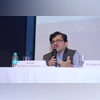 "Media must vie for independence, many being controlled: Justice Muralidhar")
WebinarsNew
Deep DiveNew
Explore Business Standard
Justice (retired) Muralidhar was speaking at BG Verghese Memorial Lecture on the topic 'Media, Courts, and Freedom of Expression'
Former Orissa High Court chief justice S Muralidhar on Friday said the media in India has had to fight for its independence as many mainstream media are either owned by "large corporate houses or by political parties".
Justice (retired) Muralidhar was speaking at BG Verghese Memorial Lecture on the topic 'Media, Courts, and Freedom of Expression' here.
"The media's role is to hold power accountable, and it cannot do so effectively if it is beholden to corporate and political interests," he said.
Highlighting the "increasing constraints on independent journalism" and the challenges posed by corporate and political influences on the media, he said major print and electronic media houses are largely controlled by corporate entities or political parties.
"The media in India has had to fight for its independence and for its freedom. It is a fact though that much of the mainstream print and electronic media are either owned by large corporate houses or by political parties. Both print and electronic media operate on purely commercial lines dependent as they are on government advertisements, licences and permissions, corporate sponsorships, commercials," he said.
While the information and broadcasting minister recently described the Indian press as 'robust and flourishing,' the former chief justice argued that this characterisation does not equate to being "free and independent." "The mainstream media today operates on purely commercial lines, relying on government advertisements, corporate sponsorships, and political patronage," he said, and added, "This dependence has led to rampant self-censorship, paid news, and the prioritisation of profit over journalistic integrity." He invoked the warning of Joseph Pulitzer, who cautioned that when a publisher views the press solely as a business venture, it loses its moral power. In today's India, the race for TRPs and corporate funding has led to a media landscape where independent journalism is under threat, he said.
A key concern raised by Justice (retired) Muralidhar was the "growing alignment of mainstream media with the establishment".
Recalling a recent panel discussion, he noted that a senior lawyer and MP of the ruling party dismissed any concerns about media bias, saying that corporate-controlled media was simply exercising its 'free choice' to support the government.
This 'choice,' Justice (retired) Muralidhar suggested, is often a result of pressure rather than genuine editorial independence. Despite these challenges, he expressed optimism about the resilience of independent journalists.
He cited examples of fearless investigative reporting, such as the Panama Papers, which exposed illicit financial dealings by global elites.
This groundbreaking investigation was the result of a collaboration between over 370 journalists from 76 countries, proving that cross-border coalitions can counteract suppression, he said.
He also acknowledged the role of digital media in providing alternative spaces for independent journalism.
'The internet and social media have enabled journalists to engage directly with their audiences, bypassing traditional gatekeepers," he noted.
"Though these platforms are not free from state scrutiny, they have allowed for the emergence of courageous voices willing to challenge power," he added.
Justice (retired) Muralidhar also delved into the judiciary's relationship with the press and emphasised that an independent media is crucial for the judiciary to function effectively in a democracy.
First Published: Mar 22 2025 | 12:10 AM IST


 Connect with us on WhatsApp