
Need of the hour to revise creamy layer ceiling for OBCs: Parl panel
The Department of Personnel and Training (DoPT) rules require the ceiling to be reviewed every three years or sooner, if needed
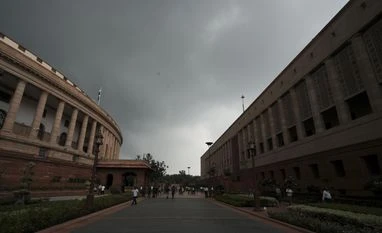 "Need of the hour to revise creamy layer ceiling for OBCs: Parl panel")
WebinarsNew
Deep DiveNew
Explore Business Standard
The Department of Personnel and Training (DoPT) rules require the ceiling to be reviewed every three years or sooner, if needed
A parliamentary committee looking into the welfare of Other Backward Classes (OBCs) has said it was the "need of the hour" to revise the creamy layer income ceiling, saying the limit is excluding a large section of eligible OBC families from reservation benefits and government welfare schemes.
In its eighth report presented to Parliament on Friday, the panel noted that the last revision of the income threshold from Rs 6.5 lakh to Rs 8 lakh per annum was carried out in 2017.
The Department of Personnel and Training (DoPT) rules require the ceiling to be reviewed every three years or sooner, if needed.
The present threshold is low, covering only a small segment of OBCs, the panel, chaired by BJP MP Ganesh Singh, said, adding inflation and rising incomes in even lower income groups had made an upward revision the need of the hour.
"The Committee is aware of the fact that the income limit for determining creamy layer for OBCs should be reviewed every three years or even before the stipulated period. However, the same has not been revised since 2017," it said.
"The Committee, therefore, in no uncertain words, reiterate their recommendation for reviewing and accordingly revising the present creamy layer threshold limit to cover more and more persons from the OBCs as this would eventually help in raising their socio-economic condition to a satisfactory level," the panel said.
The Ministry of Social Justice and Empowerment, however, told the committee that there is no proposal under consideration to revise the creamy layer limit.
Another unresolved issue flagged by the panel is the absence of equivalence between posts in autonomous bodies and government positions for determining creamy layer status.
The report said the lack of such equivalence has led to qualified OBC candidates, including those who cleared the UPSC Civil Services Examination, being denied service allocation because their parents' salaries were counted without considering post equivalence.
The committee urged the ministry to expedite work with the inter-departmental committee set up by the DoPT in 2023 to resolve the matter.
While 10 of the panel's 12 recommendations from its earlier sixth report were accepted by the government, the two on creamy layer revision and post equivalence were reiterated.
Accepted proposals include reviewing parental income limits for scholarships, expanding the Pre-Matric Scholarship Scheme under PM-YASASVI to start from Class V, increasing slots for Top Class school and college education schemes for OBCs, Economically Backward Classes (EBCs) and Denotified Tribes (DNTs), and enhancing central grants for OBC welfare.
The panel also voiced concern over a sharp fall in scholarship beneficiaries. Under the pre-matric scheme, beneficiaries dropped from 58.6 lakh in 2021-22 to 20.29 lakh in 2023-24, while expenditure fell from Rs 218.29 crore to Rs 193.83 crore.
Post-matric beneficiaries fell from 38.04 lakh to 27.51 lakh, with spending down from Rs 1,320 crore to Rs 988 crore in the same period.
States' incomplete or delayed proposals, slow fund utilisation, and transition issues to Aadhaar-based direct benefit transfer and online portals were cited as key reasons.
On budget allocation, the committee said OBCs make up 52 per cent of India's population as per the Mandal Commission, yet their central grants are far lower compared to those for Scheduled Castes, who comprise about 16.6 per cent of the population.
While allocations for OBC schemes such as PM-YASASVI have risen from Rs 1,581 crore in 2022-23 to Rs 2,190 crore in 2025-26 the panel wants proportional increases to reflect the community's size and needs.
Unspent funds were another sticking point. The report pointed to unused amounts, including Rs 86 lakh in pre-matric, Rs 98 lakh in post-matric, and Rs 15 lakh in hostel construction schemes as signs of lack of supervision and foresightedness.
It recommended stricter monitoring, more awareness campaigns in local languages, and better coordination with states to ensure timely utilisation of funds.
The committee warned that without timely policy updates and efficient execution, procedural delays and outdated eligibility norms could undermine the government's stated goal of uplifting backward classes through education, skills, and social welfare.
(Only the headline and picture of this report may have been reworked by the Business Standard staff; the rest of the content is auto-generated from a syndicated feed.)
First Published: Aug 08 2025 | 2:45 PM IST

