Solar and wind set to power two-thirds of India's growth by 2032: Analysis
As India's adoption of solar energy broadens, there is an increasing demand for significantly greater storage capacity to manage peak demand during evenings and early mornings
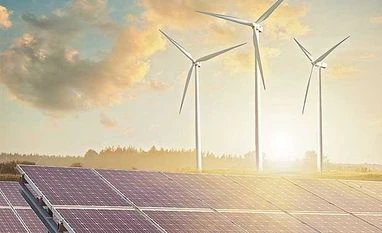
Press Trust of India New Delhi Solar and wind energy are poised to drive two-thirds of India's power generation growth by 2032 if the nation successfully attains its renewable energy targets, according to a new analysis conducted by the global energy think tank Ember.
Solar power in India has evolved significantly since 2017 when it accounted for only 1 per cent of the country's power mix. Should India meet its solar targets outlined in the 14th National Electricity Plan (NEP14), its share is expected to surge from 5 per cent to 25 per cent during the financial year 2022-2032, marking a period of rapid expansion.
This suggests that India's power generation growth, which was predominantly coal-driven over the past decade, could shift toward solar and wind sources in the next ten years, provided that India stays on course to achieve its NEP14 objectives, as per Ember's analysis.
Meanwhile, as India's adoption of solar energy broadens, there is an increasing demand for significantly greater storage capacity to manage peak demand during evenings and early mornings, especially in light of recent power shortages.
Ember's India Electricity Policy Analyst, Neshwin Rodrigues, said, "India's electricity supply landscape is projected to change quite significantly in the next decade or so, with solar and wind likely to drive the growth in generation."
"Given their variable nature, a significant increase in storage capacity is crucial to balance generation and demand."
India has committed to achieving 500 GW of non-fossil fuel-based electricity installed capacity by 2030. At present, the country has 424 GW of power generation capacity which includes around 180 GW from non-fossil energy sources.
Union Power and New and Renewable Energy Minister R K Singh last week said India will achieve its 500 GW renewable energy capacity target before the 2030 deadline.
As part of its commitment to renewable energy, the government intends to tender 50 GW of solar and wind capacity annually over the next five financial years.
However, to meet the ambitious NEP14 targets, Ember's analysis indicates that India must increase its annual solar capacity addition by around 36 per cent each year until 2026-27.
This translates to a commissioning of at least 17.5 GW of solar capacity in the financial year 2024, with a further increase to 41 GW by the target year of 2027.
(Only the headline and picture of this report may have been reworked by the Business Standard staff; the rest of the content is auto-generated from a syndicated feed.)


 "Solar and wind set to power two-thirds of India's growth by 2032: Analysis")

