Chief of Defence Staff (CDS) General Anil Chauhan, the tri-service chief, said the concept of Aatmanirbharta would make India a “major player” on the global stage, where it was already “placed uniquely, close to both the west and the east,” and was reflected in the National Security Strategies of most major powers.
The CDS said the innovation was playing a major role in this, with India boasting of 84,000 start-ups, which had indigenised more than 96,000 defence products.
The three senior-most officers from the army, navy and air force were speaking at a seminar on Aatmanirbharta (self-reliance) in New Delhi on Saturday.
The chief of the Indian Navy, Admiral R Hari Kumar, invoked Aatmanirbharta to argue strongly for the construction of a third aircraft carrier, which would be the navy’s second indigenous aircraft carrier after INS Vikrant, which Prime Minister Narendra Modi commissioned last September.
The third carrier was not intended to match the People’s Liberation Army (Navy), or PLA(N) – which had begun constructing its third carrier. Instead, it was needed to safeguard national interests, such as the sea lines of communications (SLOCs) in the Indian Ocean, through which most of the world’s trade passes, said Kumar.
Countering the IAF’s argument that the SLOCs could be safeguarded by shore-based air power, such as the Sukhoi-30MKI squadron located in Thanjavur, Kumar pointed out that “shore-based air power cannot provide adequate persistence over the area of interest.”
In contrast, carrier-based air power not only provides indefinite persistence over the fleet, but also constitutes a mobile airfield that can move more than 500 kilometres per day.
Hari Kumar dismissed the argument that equipping the navy with a number of nuclear-propelled attack submarines (SSNs) would do away with the need for a third carrier. “This is not an either/or choice between aircraft carriers and nuclear (powered) submarines. The carrier is needed for providing a varied set of capabilities at a point,” he said.
The navy chief struck a positive note in reporting that the degree of indigenisation in warships had risen. Of the three capabilities of a warship – the float, move and fight components – the latter two had risen significantly.
The float component, which constituted mainly the hull, had already been indigenised to about 95 per cent, with the development of indigenous warship-grade steel by the DRDO, Midhani and SAIL. Warships were all being constructed now with indigenous DMR 249A and DMR 249B grade steel.
Kumar stated that the move component had risen from about 55 per cent a few years ago to 65 per cent today, thanks to the indigenous development of control systems, shafting, etc. Still lacking in the country today are diesel engines and gas turbines, which continue to be imported.
Finally, the fight component has risen from about 35 per cent a few years ago to 55 per cent today, thanks to the indigenous production of many key sensors and armaments – such as the BrahMos missile, the Long Range Surface-to-Air Missile (LR-SAM), torpedo tubes and naval guns.
Kumar pledged that, just as the PM had undertaken to transform India to a developed country by 2047, a century after independence, the Indian Navy would pledge to become a fully-Aatmanirbhar force by that year.
The chief of the Defence Research and Development Organisation (DRDO), Dr Samir Kamath, injected a note of reality, pointing out that Aatmanirbharta involves developing control over the design of products – not just manufacturing it in the country.
“We cannot spend just 5.5 per cent of the defence budget on R&D (to become self-sufficient). Countries such as the United States spend 10-15 per cent of their defence budget on R&D,” said Kamath.
Kamath said that the DRDO was drawing in private sector firms to participate as “design cum production partners” (DCPPs), working alongside the DRDO from the beginning of the design process, and going on to manufacture the product for use by the services.
Towards boosting R&D capability, the DRDO had opened 15 Centres of Excellence. In addition, the DRDO had instituted five “young scientists’ laboratories”, which were manned by scientists under the age of 35 years.
“These laboratories have been chosen to work in areas which can create significant disruptions,” said Kamath.

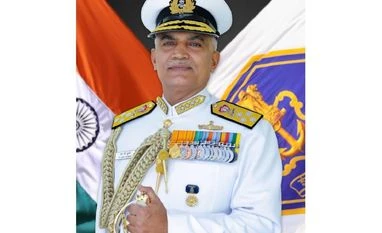 "With indigenisation growing in warships, Navy asks for 3rd aircraft carrier")












 Connect with us on WhatsApp