Home / Industry / Auto / Suzuki halts Swift production in Japan as China curbs rare earth exports
Suzuki halts Swift production in Japan as China curbs rare earth exports
Swift production halt: Global auto supply chains are feeling the heat as China tightens rare earth mineral exports, disrupting production at Suzuki, Ford, BMW, and others
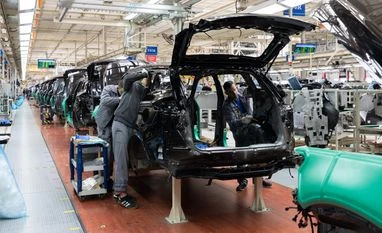
Suzuki halts Swift production in Japan as China rare earth curbs disrupt supply | Representative image of car manufacturing by Freepik
Japanese automaker Suzuki Motor has suspended production of most of its Swift compact car models at its domestic plants due to a shortage of parts linked to China’s rare earth export restrictions, business daily Nikkei Asia reported on Thursday. This marks the first direct hit to a Japanese automaker from Beijing’s curbs, and analysts warn that wider disruptions could follow.
The halt, which excludes the Swift Sport model, began on May 26 and is set to continue until June 6. While Suzuki did not officially cite the reason, the latest report suggests the move is linked to delays in parts procurement caused by slow Chinese export licence approvals.
China, which accounted for around 70 per cent of the world’s rare earth metal production in 2023 and about 90 per cent of rare earth magnet manufacturing, has slowed the issuance of export licences since imposing new controls in April. These measures came in response to US President Donald Trump’s reciprocal tariffs on Chinese goods.
The disruption has shed light on the vulnerability of global car production to China’s dominance in rare earth elements, which are essential for electric and hybrid vehicle motors, among other high-tech uses.
Ford, BMW, Mercedes also face rare earth-linked delays
The issue is not isolated to Japan. Ford temporarily shut down its Chicago assembly line for the Explorer SUV in late May, and European parts suppliers are also beginning to shut operations, according to CLEPA, the European Association of Automotive Suppliers.
Mercedes-Benz is in “constant dialogue” with suppliers and is considering stockpiling key components, said Jörg Burzer, head of production. “Physical buffers play a role,” he added, speaking from a factory in Rastatt, Germany.
Meanwhile, BMW has acknowledged that some of its supply chains are already being affected. The company is actively monitoring risks and coordinating with vendors to prevent major fallout.
Though automakers like Mercedes and BMW don’t source rare earth metals directly, their Tier-1 suppliers use them in electric motors and hybrid systems, exposing them to the broader supply shock.
India to send auto industry delegation to China
Industry experts in India have warned authorities of the sharply declining availability of rare earth magnets. They cautioned that unless imports from China resume swiftly, production at several electric and ICE vehicle factories could come to a halt.
India is set to send a high-level industry delegation to China next week, including representatives from the Society of Indian Automobile Manufacturers (Siam) and the Automotive Component Manufacturers Association of India (Acma). The delegation will hold talks with Chinese officials to fast-track approvals for rare earth mineral shipments, which are critical to the country’s automotive industry.
At the same time, India’s commerce and external affairs ministries are working in tandem through the Indian embassy in Beijing to address the supply bottlenecks and facilitate a resolution.
What rare earth minerals do in EVs and traditional cars
Rare earth minerals play a vital role in modern cars, particularly in electric vehicles (EVs), where they are used to make compact, high-performance permanent magnets for electric motors. These magnets, made with elements like neodymium, dysprosium, and terbium, enable motors that are smaller, lighter, and more efficient than alternatives, crucial for improving EV range and performance.
Rare earths are also found in ICE components like catalytic converters and in various systems across both EVs and traditional cars, from sensors to display screens.
Japan to propose US cooperation on rare earth supply chains
Amid growing concern, Japan is preparing to propose enhanced cooperation with the US on rare earth supply chains, especially in light of China’s export curbs. The proposal is expected to be tabled in upcoming tariff negotiations.

 "Suzuki halts Swift production in Japan as China curbs rare earth exports")

