Hundreds of flights across the world were cancelled and air travel in India and abroad is set to be disrupted over the weekend after Airbus on Friday said intense solar radiation might corrupt data critical to flight controls in a significant number of A320 family aircraft, and instructed airlines to undertake software changes.
This comes after a JetBlue A320 flying from Cancún to Newark on October 30 suddenly pitched down even though the pilots had not commanded it to do so. The aircraft lost altitude, forcing a diversion to Tampa. At least 15 passengers were injured, prompting US authorities to investigate an “uncommanded” altitude drop.
For a widely used aircraft such as the A320, this raised serious concerns. Any sudden pitch change during autopilot use is treated as a possible flight-control system issue rather than pilot error.
Around 200-250 Airbus A320 family planes operated by Indian airlines will need software changes to address the potential issue of intense solar radiation impacting data critical to flight controls, according to a source.
What investigators discovered inside the A320’s control system?
When Airbus and regulators examined the JetBlue flight data, they found a consistent pattern:
* The issue was traced to the ELAC (Elevator and Aileron Computer), which converts pilot or autopilot inputs into movements of the aircraft’s pitch and roll controls.
* A recent software update on certain A320-family aircraft introduced a weakness- during periods of high solar activity, incoming ELAC data could become corrupted.
* This corrupted information could cause the elevators to receive incorrect instructions, leading to short, uncommanded pitch changes similar to those seen on the JetBlue flight.
In simple terms, a routine software update left the aircraft’s flight-control computer vulnerable to rare but risky data errors triggered by intense solar radiation.
Airbus has now directly linked the issue to “intense solar radiation” interfering with data essential to flight controls on a “significant number” of A320-family jets.
A problem affecting nearly 6,000 aircraft
Once Airbus identified which aircraft had the affected ELAC setup, the scale became clear. According to Reuters, around 6,000 A320-family aircraft worldwide are impacted — nearly half of the 11,300 A320s currently in service.
This is not a fault on a single aircraft but a software vulnerability present in a standard system used across thousands of jets. As a result, the situation is being described as one of the largest recall-type actions in Airbus’ 55-year history.
Airbus and regulators stress that the aircraft remain safe for normal operations. However, they also warn that airlines choosing not to apply the fix are accepting a known and avoidable risk of more uncommanded pitch events.
The mandatory fix ordered by Airbus and regulators
To address the risk, quick action followed:
- Airbus issued an Alert Operators Transmission (AOT) — its highest-priority bulletin — instructing airlines to install software and/or hardware protections on affected A318, A319, A320 and A321 aircraft.
- The European Union Aviation Safety Agency (EASA) then issued an emergency airworthiness directive requiring all affected aircraft to be fixed before their next flight.
- National regulators, including India’s
DGCA and agencies across Europe, the Asia-Pacific region and the Americas, have echoed this: aircraft that do not meet the ELAC requirements cannot operate commercial flights.
Although not officially termed grounding, the instruction effectively means aircraft must remain on the ground until modified and cleared.
A fast fix, but a tough week for airlines
The update itself is quick, but the scale and timing are challenging. For around two-thirds of affected aircraft, airlines can either revert to an earlier ELAC software version or install a corrected one. This can be done in around two hours, often between flights.
Older jets — roughly 1,000 aircraft — need hardware changes before the software fix can be applied. These aircraft face longer grounding periods at a time when maintenance capacity, spare parts and engineering teams are already under strain.
In reality, thousands of aircraft now need updates during a busy travel period, all competing for limited maintenance slots.
Global impact: Airlines feeling the pressure
Because the A320 is central to global short- and medium-haul operations, the disruption has been widespread.
United States
* American Airlines: Around 340 of its 480 A320-family aircraft require the fix. Most updates should be completed within two days, with each aircraft grounded for about two hours.
* Delta: Fewer than 50 A321neo jets affected.
* United: Six aircraft flagged.
* Hawaiian Airlines: Not affected
Asia-Pacific
* All Nippon Airways has cancelled at least 65 domestic flights and expects more.
* Air New Zealand has also cancelled and delayed flights while it updates its fleet.
Europe and Latin America
- Lufthansa, easyJet, Wizz Air and Air France have all taken aircraft out of service temporarily.
- Air France has cancelled around 35 flights, roughly 5 per cent of its daily operations.
- Avianca in Colombia, with over 70 per cent of its fleet affected, has paused ticket sales until December 8.
- Mexico’s Volaris has warned of delays and cancellations for up to 72 hours.
India: A major A320 market facing significant disruption
India is among the most heavily affected countries because its domestic aviation network relies extensively on the A320 family.
* Indian airlines operate roughly 560 A320-family aircraft.
* Around 200–250 aircraft need immediate software or hardware updates.
The DGCA has issued a mandatory directive covering Airbus A318, A319, A320 and A321 types. Airlines have been informed that affected aircraft cannot fly until all checks and modifications are completed and recorded.
For now, both Airbus and global regulators have one clear instruction for airlines: “fix first, fly later.”

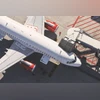 "All about the Airbus A320 software glitch that sparked major recall")


 Connect with us on WhatsApp