The production-linked incentive (PLI) scheme for the remaining part of a national programme on battery storage, especially with some specialised applications, may be changed to attract more sectors and create demand, according to two persons in the know.
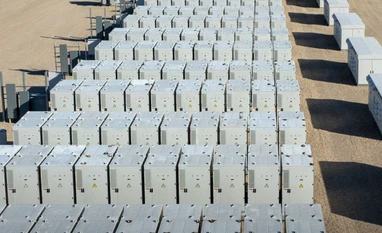
The Ministry of Heavy Industries (MHI) and the Ministry of New and Renewable Energy (MNRE) are working on the programme titled “National Programme on Advanced Chemistry Cell (ACC) Battery Storage” for the remaining 10 GwH capacity of the 50 GwH target, especially for grid-scale stationary storage (GSSS) applications.
As of now, the plan is to extend coverage to all sectors or all aspects of batteries like data centres, telecom towers, and power backups.
“The 10 GwH, which is left, is yet to be done by the MNRE. The 40 GwH part has been done. The remaining 10 GWh may be a little different and there could be some changes,” a senior government official said without giving details.
With a financial outlay of ₹18,100 crore, the ACC PLI scheme was announced in 2021 to support developing 50 GwH of domestic cell-manufacturing capacity and promote the use of battery storage in various applications, including electric vehicles (EVs), renewable-energy integration, and grid stabilisation.
The other person cited above said: “There could be some big changes because the government wants more players to come in. So, the ongoing deliberations are on capturing all applications and categories of batteries — those of two-wheelers, three-wheelers, passenger vehicles, commercial vehicles, energy storage, power backup, data centres and even telecom towers. Now it’s not clear what those changes will be.”
“In the existing PLI for ACC batteries, the threshold has been kept high and only one or two sectors are covered. Hence demand was not created. So, things are not moving and many companies backed out. Additionally, many new projects are coming out, and they are not eligible for it today,” the second person said when asked about the rationale behind the modifications.
Ola Electric Mobility, Rajesh Exports, and Reliance New Energy were awarded a capacity of 30 GwH under the ACC PLI scheme. That was to set up a plant within two years of signing the final agreement. It has now been three years but they have not been able to meet the conditions on investment and domestic value addition (DVA).
According to the scheme’s guidelines, beneficiaries must achieve at least 25 per cent DVA in the first two years and 60 per cent in five years, and invest ₹225 crore per GwH at the mother unit.
Queries sent to the secretaries and spokespersons of the MHI and MNRE remained unanswered till the time of going to press.
Lack of skill and experience are the challenges in manufacturing batteries, particularly lithium-ion batteries. According to Shyamasis Das, fellow at the energy, resources & sustainability vertical of the Centre for Social and Economic Progress, Indian companies rely heavily on foreign expertise and equipment, especially from China.
“Simply importing equipment to manufacture batteries is insufficient. Experience is crucial because the initial failure rate is often high. For example, if you manufacture batteries of 100 KwH, you may need to recycle at least 50 per cent initially. Over time, the goal is to reduce this failure rate to 30 per cent, which is considered the industry standard, because profitability is directly tied to lower failure rates. Achieving this requires experience, expertise, and a skilled workforce. Thus, merely importing equipment will not resolve these issues, especially since many domestic players lack the necessary experience.”
Additionally, China is the dominant global player in lithium-ion batteries. To develop expertise, collaboration with Chinese entities is essential. However, not all Chinese companies are suitable partners, particularly in sensitive sectors like battery production,