Cement sector prospects on the mend, but valuations may be hurdle

Cement demand is driven by government projects in infrastructure and housing, a rural rebound, and industrial capex
Cement industry
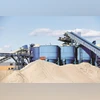
The capacity addition is back-ended, with around 40 mtpa scheduled to go operational in H2FY26, and this could bring focus on market share. | Representational Image
Devangshu Datta New Delhi
4 min read Last Updated : Aug 25 2025 | 10:52 PM IST
After a strong April-June quarter (Q1) of FY26, despite seasonal factors, cement demand looks set to improve further on the back of higher infrastructure spending and a better demand-supply balance. Spot cement prices have firmed up while fuel prices remain stable, which could be margin-accretive. Consolidation in the sector could help with pricing power. Sentiment is positive with hopes of a GST reduction.
 
Cement demand is driven by government projects in infrastructure and housing, a rural rebound, and industrial capex. All-India average cement prices were flat month-on-month (M-o-M) in August 2025 and down 1 per cent quarter-to-date compared with Q1FY26. Demand improved M-o-M in July 2025 with volume growth in high single digits. Adjusted for consolidations, which may have inorganically boosted volumes for UltraTech and Adani, industry volume growth may be about 6-8 per cent year-on-year (Y-o-Y) in FY26.
 
Prices remained flat M-o-M in August 2025 in the South and dropped quarter-on-quarter (Q-o-Q) (till date) by about 4 per cent, correcting after rising Rs 50-60 per bag (each bag is 50 kg) in April-May 2025. Prices are still higher by Rs 25-35 a bag (up 10 per cent) compared with March 2025 levels. The South region saw cement demand rising by 8-9 per cent Y-o-Y in Q1FY26.
 
The East region saw demand rising in Bihar and Odisha in July, though demand fell in August due to rains. Prices were flat. In the West, prices were flat or down 1 per cent Q-o-Q compared with Q1FY26. Demand improved M-o-M in July 2025, driven by infrastructure, housing, and real estate, but rains held up projects. In the North and Central regions, prices were unchanged M-o-M in August 2025 but demand increased M-o-M. 
 
Fuel prices (both imported petcoke and coal) have been range-bound for several months and are down 5-7 per cent Y-o-Y. Over April-August 2025, average South African coal prices stood in the range of $89-95 per tonne, while US petcoke prices were $101-108 per tonne. The average imported coal (South Africa) price declined 4 per cent M-o-M to $92 per tonne in August 2025, while average imported petcoke (US) prices inched up 1 per cent M-o-M to $106 per tonne.
 
Margins could be sustained by comfortable input prices (and potentially lower transport costs, given cheaper crude could translate into lower diesel costs). Margins improved sharply in Q1FY26, but back-ended capacity additions in FY26 may bring prices and margins under some pressure in the second half (H2) of FY26.
 
Approximately 50 million tonnes per annum (mtpa), a growth of 7-8 per cent Y-o-Y, of capacity additions will come on stream in FY26, mostly from five large companies. The capacity addition is back-ended, with around 40 mtpa scheduled to go operational in H2FY26, and this could bring focus on market share.
 
Q1FY26 saw higher realisations (up 4.6 per cent Q-o-Q on average) due to price hikes, offset somewhat by higher costs. Margins surged to multi-quarter highs of Rs 1,200 per tonne (up 36 per cent Y-o-Y and up 6 per cent Q-o-Q). Incidentally, leaders such as UltraTech, Shree Cement, and Dalmia Bharat lost market share in Q1FY26, which pushed margins up. However, given trends in demand and input costs, margins are not likely to reduce by much more than Rs 75-100 per tonne.
 
A potential GST rate cut for cement to 18 per cent (from 28 per cent) has led to a speculative rally in cement stocks. However, cement demand is not very price-elastic, so drops in price may not lead to appreciable volume gains.
 
The sector has challenging valuations, but the prospects of strong earnings growth in FY26 — with low base effects versus FY25, stable pricing, increased consolidation, and favourable fuel prices — could fuel further investments in the sector. Cement despatches leading into the upcoming festive season could be a key monitorable.
   
According to a Bloomberg poll of analysts in August, most analysts are bullish on UltraTech, Ambuja Cements, and Dalmia Bharat, while the majority is bearish on Shree Cement. Their average one-year target prices are Rs 13,828, Rs 653, Rs 2,341, and Rs 31,607, respectively.
 

One subscription. Two world-class reads.

Already subscribed? Log in

Subscribe to read the full story →
*Subscribe to Business Standard digital and get complimentary access to The New York Times

Smart Quarterly

₹900

3 Months

₹300/Month

SAVE 25%

Smart Essential

₹2,700

1 Year

₹225/Month

SAVE 46%
*Complimentary New York Times access for the 2nd year will be given after 12 months

Super Saver

₹3,900

2 Years

₹162/Month

Subscribe

Renews automatically, cancel anytime

Here’s what’s included in our digital subscription plans

Exclusive premium stories online

  • Over 30 premium stories daily, handpicked by our editors

Complimentary Access to The New York Times

  • News, Games, Cooking, Audio, Wirecutter & The Athletic

Business Standard Epaper

  • Digital replica of our daily newspaper — with options to read, save, and share

Curated Newsletters

  • Insights on markets, finance, politics, tech, and more delivered to your inbox

Market Analysis & Investment Insights

  • In-depth market analysis & insights with access to The Smart Investor

Archives

  • Repository of articles and publications dating back to 1997

Ad-free Reading

  • Uninterrupted reading experience with no advertisements

Seamless Access Across All Devices

  • Access Business Standard across devices — mobile, tablet, or PC, via web or app

Topics :The CompassCement demandcement industrystock market trading

Next Story



