Home / Industry / News / Several FMCG brands are ditching 'magic' price points: Here's what they are
Several FMCG brands are ditching 'magic' price points: Here's what they are
Following the rationalisation of rates under the new GST reforms, most daily-use items have shifted to the lower 5 per cent tax slab, creating a challenge for FMCG firms
Despite the challenges, many of the leading companies, including Mother Dairy, ITC, and Hindustan Unilever Ltd (HUL), have already passed on the benefits to the consumers.
Major fast-moving consumer goods (FMCG) companies are shifting away from the popular or 'magic' price points as they await clarity on whether increasing product weight at the same price could be considered equivalent to a price cut under the new Goods and Services Tax (GST) regime, which came into effect on Monday.
The Economic Times reports that Parle-G, which had held the price of its smallest pack at ₹5 for almost 20 years, has now changed it to ₹4.45. In a similar move, candies that used to cost ₹1 are now priced at 88 paise, and ₹2 shampoo sachets will sell for ₹1.77.
What are magic price points?
Magic price points are specific prices that attract consumers psychologically, making them more likely to buy a product. Retailers, e-commerce platforms, and marketers use these price points to boost sales. Here are some of the examples of magic or popular price points:
In India, products are often priced at ₹99, ₹199, ₹499, etc., instead of ₹100, ₹200, ₹500. Even though the difference is just ₹1, customers perceive it as significantly cheaper because they focus on the first digit.
Many subscription services in India use tiered pricing: ₹299, ₹499, ₹999. Small differences in price create a psychological advantage, making ₹499 seem much more reasonable than ₹500.
Online platforms like Flipkart, Amazon, and BigBasket often use ₹199, ₹299, ₹399 pricing to increase clicks and purchases. It also helps in discount perception.
Luxury items are sometimes priced in round numbers such as ₹50,000 or ₹100,000, signifying quality and simplicity.
Why are companies shifting?
Following the rationalisation of rates under the new GST reforms, most daily-use items have shifted to the lower 5 per cent tax slab. This has created a challenge for FMCG firms in determining how best to pass the benefits to consumers. Some companies considered increasing product quantities instead of cutting prices, but government clarification on this approach is still awaited.
In the meantime, while many firms plan to sell existing stocks at current prices, others are adopting odd pricing strategies for their upcoming products.
Challenges with odd-pricing
Odd pricing comes with its own set of challenges. For instance, it is generally easier for a consumer to pay ₹5 than ₹4.54, as seen in the case of Parle-G. Mayank Shah, Vice-President at Parle Products, told The Economic Times that while there may be an initial impact, the widespread use of Unified Payments Interface (UPI) among customers should mitigate most issues.
However, despite UPI’s prevalence in India, disputes may still arise between consumers and shopkeepers when payments are made in cash, particularly in rural areas where digital payments are less common.
Many FMCG firms pass on benefits
Despite the challenges, many of the leading companies, including Mother Dairy, ITC, and Hindustan Unilever Ltd (HUL), have already passed on the benefits to the consumers.
As reported earlier by Business Standard, Mother Dairy announced rate cuts in products spanning its portfolio from milkshakes to paneer and jams to frozen products under its Safal brand. HUL also announced price cuts across product segments in newspaper advertisements as mandated by the government.
Mother Dairy cut paneer to ₹92 (200 g) and ₹174 (400 g), milkshakes to ₹28 (180 ml), butter to ₹285/₹58 (500 g/100 g), and cheese cubes to ₹135 (180 g). HUL slashed Dove shampoo to ₹435 (340 ml), Lifebuoy soaps to ₹60 (4×75 g), Sunsilk shampoo to ₹370 (350 ml), Boost to ₹110 (300 g), Knorr soup to ₹55 (67 g), and Bru coffee to ₹270 (75 g), among others.

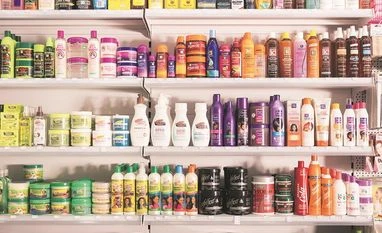 "Several FMCG brands are ditching 'magic' price points: Here's what they are")


 Connect with us on WhatsApp