Rs 1,500 cr incentive scheme in the works for recycling critical minerals

Midwest Advanced Materials to produce rare earth magnets amid supply curbs from China
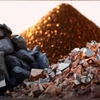
Rare earth minerals
IREL is close to the point of supply, as its three units in Kerala, Odisha and Tamil Nadu already produce monazite from beach sand minerals—but this is not sufficient to meet domestic demand.
Puja Das New Delhi
4 min read Last Updated : Jun 06 2025 | 11:59 PM IST
Following the disruption in the supply of rare earth or permanent magnets after China’s notification on April 4, the mines ministry is planning to introduce a ₹1,500 crore incentive scheme to recycle critical minerals, according to a top official.
 
In parallel, Midwest Advanced Materials (MAM), a Hyderabad-based company that specialises in researching and developing advanced materials and rare earth magnets, is in discussion with the Non-Ferrous Materials Technology Development Centre (NFTDC), Hyderabad, to acquire its technology for extracting and processing rare earth magnets, the official stated. 
The incentive scheme for recycling will focus on critical minerals such as neodymium (a rare-earth element from the lanthanide series), copper, lithium, nickel, and cobalt, and will be part of the National Critical Mineral Mission (NCMM), announced in January.  
“What we aim to do is incentivise the recycling of critical minerals. Rare earth magnets are included among these critical minerals. Recycling and retrieving old permanent magnets is challenging, but if someone wants to recycle neodymium, one of the four rare earths, we will provide incentives,” the official said, adding, “The scheme is in its final stage and will seek cabinet approval soon.”  This initiative has been designed to attract more companies to set up operations in India and ensure that processing occurs domestically. The official noted: “If we throw away a lot of these batteries, we can extract lithium from them. Companies already collect used batteries through scrap dealers, crush them, and extract lithium for resale. However, these companies argue that it is not viable due to regulatory and environmental constraints. We are offering incentives to encourage more companies to engage in this process.” 
At present, several companies in India, including Attero Recycling, Lohum Cleantech, Gravita India Ltd, Umicore, Glencore, Li-Cycle Corporation, and RecycLiCo Battery Materials Inc are extracting lithium from used batteries. However, the government wants to increase the number of firms up to 100 from current 10-12. Currently, there is no scrap duty imposed on this process.  ALSO READ: India to amend laws to allow overseas exploration of critical minerals
 
“A significant amount of scrap comes from abroad. With the incentive scheme, we can enhance recycling efforts. This approach accelerates the availability of critical minerals, while mining can be time-consuming,” the official stated. Queries sent to the secretary and spokesperson for the mines ministry and MAM remain unanswered till the time of going to press. 
Regarding the extraction and processing of rare earth magnets, the official said, “MAM has acquired the technology developed by the NFTDC, Hyderabad. The technology is being commercialised. In six months, we will be able to produce permanent magnets in India. However, the challenge is that automobile companies cannot afford to wait, and even if MAM succeeds, China could undermine their business by offering lower prices.” 
Currently, IREL (India), formerly known as Indian Rare Earths Ltd, is the sole producer of rare earth elements in India and has a lengthy production timeline. India has auctioned two rare earth mines.
 
The official said: “We cannot claim that we can immediately supply rare earth magnets because establishing a supply chain takes time.” 
IREL is close to the point of supply. Its three units -- in Kerala, Odisha, and Tamil Nadu -- are producing monazite from beach sand minerals, but it’s not enough to cater to the domestic demand.  
From monazite, four rare earth elements — neodymium, praseodymium, dysprosium, and terbium — necessary for permanent magnets can be extracted. 
Although rare earth elements are found in several countries, China dominates global supply, accounting for 61 per cent of production and 92 per cent of processing, according to the International Energy Agency. 
India is recognised as the fifth-largest holder of rare earth elements (REEs) globally, with reserves estimated at 6.9 million tonnes. However, Indian resources are relatively low in grade and associated with radioactivity, making extraction long, complex, and costly. 
To transition from rare earth reserves to finished products, a comprehensive ecosystem is necessary. This involves various stages such as regulatory approval, mining, beneficiation, extraction, refining, and alloy production. For rare earth magnets, the process includes converting the alloy into magnets for use in energy-saving appliances, resulting in minimal usage of rare earths in the final products.
 

One subscription. Two world-class reads.

Already subscribed? Log in

Subscribe to read the full story →
*Subscribe to Business Standard digital and get complimentary access to The New York Times

Smart Quarterly

₹900

3 Months

₹300/Month

SAVE 25%

Smart Essential

₹2,700

1 Year

₹225/Month

SAVE 46%
*Complimentary New York Times access for the 2nd year will be given after 12 months

Super Saver

₹3,900

2 Years

₹162/Month

Subscribe

Renews automatically, cancel anytime

Here’s what’s included in our digital subscription plans

Exclusive premium stories online

  • Over 30 premium stories daily, handpicked by our editors

Complimentary Access to The New York Times

  • News, Games, Cooking, Audio, Wirecutter & The Athletic

Business Standard Epaper

  • Digital replica of our daily newspaper — with options to read, save, and share

Curated Newsletters

  • Insights on markets, finance, politics, tech, and more delivered to your inbox

Market Analysis & Investment Insights

  • In-depth market analysis & insights with access to The Smart Investor

Archives

  • Repository of articles and publications dating back to 1997

Ad-free Reading

  • Uninterrupted reading experience with no advertisements

Seamless Access Across All Devices

  • Access Business Standard across devices — mobile, tablet, or PC, via web or app

Topics :mineralsmines ministryChina

Next Story



