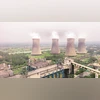
Power plants running on coal are responsible for an estimated 112,000 premature deaths in India each year due to toxic emission, and the country remains heavily reliant on the commodity, with nearly 75 per cent of its electricity grid linked to coal-based units, according to the United States-based group Proceedings of the National Academy of Sciences.
These alarming figures underscore the urgent need for stronger environmental policies.
Shripad Naik, minister of state for new and renewable energy, on August 18 told the Rajya Sabha the Ministry of Environment had issued a gazette notification on July 11. The directive exempts most coal-based thermal-power units from installing flue-gas desulphurisation (FGD) systems, the technology crucial for reducing sulphur-dioxide (SO2) emission.
This exemption comes despite the fact that most plants currently lack FGD devices, and a significant number of those emit SO2 at levels beyond the permissible limits set by the government. In India, there are approximately 281 such plants, divided into 537 units in different parts of the country. Of those, only 44 units have FGD installed; the rest of the 493 units do not, and 387 units crossed emission norms in FY25.
The units that have installed FGD devices have seen a lower emission of SO2. Among 44 units that have the devices, only eight have seen an increase in SO2 emission more than the prescribed norm.
Thermal-power plants are classified into three categories. Category A includes those located within 10 km of the National Capital Region or cities with a population of over one million. Category B comprises those within 10 km of critically polluted areas. Category C includes all remaining plants that do not fall under Category A or B. Approximately 73 per cent of thermal-power units fall in Category C. Most of these units lack FGD devices and do not comply with the prescribed emission norms.
The data suggests there are 17 states in which thermal-power plants do not have FGD systems. Chhattisgarh (46 units), Maharashtra (43 units), and Uttar Pradesh (42 units) are those where the largest number of these units have emitted in FY25 SO2 more than the prescribed norm.
Sunil Dhaiya, founder and lead analyst at Envirocatalysts, says to reduce the impact of sulphur-dioxide emission, the government typically recommends dispersing pollutants at greater heights, allowing them to travel longer distances and scatter, diluting their effect. However, this method does not eliminate the problem. “To address this problem, plants either need FGD systems or a circulating fluidised bed reactor, which most of them lack. The ministry concerned in India has consistently extended the deadline for installing FGD devices, creating an atmosphere where plants feel they won’t face any repercussion, signalling a lack of intent to enforce installation,” Dhaiya adds.
Originally, all thermal-power plants were supposed to install FGD systems by 2017. However, most received multiple deadline extensions. Under the latest gazette notification, plants in Categories A and B are still mandated to install FGD systems by 2027, while Category C plants have been granted exemption from this requirement.
Manoj Kumar N, researcher at the Centre for Research on Energy and Clean Air (Crea), points out the absence of FGD systems poses environmental and health risks. Regardless of its category or age, a plant without FGD systems is bound to emit toxic gases, particularly SO2, which cannot be effectively contained. “Plants often cite the high cost of FGD installation and its associated energy consumption as deterrents. However, the long-term health and environmental benefits of reduced SO2 emission far outweigh the initial capital costs,” Manoj says.
The notification from the Ministry of Environment may have been influenced by a report from the National Environmental Engineering Research Institute, and it has been supported by the NITI Aayog. The report suggests that installing FGD systems increases both power and coal consumption, while also claiming that SO2 emission from plants contributes less to overall pollution, implying that the need for FGD systems may not be essential. “The installation of FGD systems will certainly reduce the load of SO2 in the atmosphere. However, the existing ambient air data analysis does not indicate the impact of SO2 on the surrounding air environment,” the report added.
Crea’s 2024 report titled “Increased SO2 Emissions From Coal-Fired Power Plants: FGD Installation That Should Not Be Delayed Further”, authored by Kumar, says delays in implementing FGD systems have increased capital interest costs and driven up component prices due to inflation. These delays not only place a greater financial burden on power producers but also contribute to higher electricity tariffs for consumers. Timely FGD systems installation, the analysis notes, could prevent between 0.21 and 0.48 million premature deaths over the next decade, with estimated annual health and economic benefits ranging from $18.1 billion to $604 billion, equivalent to 0.44 per cent to 10 per cent of India’s gross domestic product.
“During stubble burning season, farmers face heavy fines and rigorous monitoring, with strict enforcement of pollution control measures. In contrast, CFPPs are often granted leniency, with delays in implementing necessary technologies like FGD and repeated extensions for compliance,” the Crea report added. In 2022, India emitted the highest anthropogenic SO2, 11,243 kilotonnes, followed by China (10,092 kilotonnes), Russia (5,212 kilotonnes), and Indonesia (3,811 kilotonnes). India’s yearly growth of anthropogenic SO2 increased from 3.3 per cent in 2013 to 6.4 per cent in 2017 and fell to 4.5 per cent in 2022.
The latest notification remains cause for worry, because the exemption of the anti-pollutant systems can have long-term effects on people who live in the vicinity of plants. Air pollution from coal-based plants contributes to deaths caused by lung cancer, respiratory illnesses, and heart disease, primarily due to the emission of particulate matter, SO2, and nitrogen oxides.