Associate Sponsors

Co-sponsor

India grapples with grid curtailment, biggest test yet on energy transition

Rising renewable energy capacity is straining India's grid, forcing curtailments and raising concerns over stability
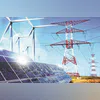
power sector, electricity, green energy, solar power
Rajasthan and Gujarat are two of the most suitable states for renewable energy plants. For these plants to supply electricity, they need approvals for setting up transmission lines, including Right of Way approvals.
Nandini KeshariSudheer Pal Singh New Delhi
7 min read Last Updated : Mar 04 2026 | 9:43 PM IST
The rising share of renewable energy in India’s fuel basket — something that’s rightly applauded — has handed policy planners a major headache: How to maintain grid stability and avoid supply curtailments. 
While renewable energy is key to attaining net zero status — a target India has pledged to reach by 2070 — non-fossil fuels come with their own share of problems. Solar and wind energy plants, for instance, can only generate power intermittently (when it is sunny or windy), which causes disturbances in the power grid, which in turn requires stronger baseload support from coal or nuclear power plants. 
This seemingly simple issue now occupies a central place in the long list of problems to tackle for a meaningful energy transition to renewables. Planners are looking at ways to increase storage, among other solutions, across states. 
Central Electricity Authority (CEA) chairman Ghanshyam Prasad last week highlighted the issue of India's power grid facing oscillations due to the variable nature of electricity generated by renewable energy (RE) projects. Grid oscillations occur due to fluctuations in transmission voltage and can harm power-transmission equipment. 
India’s electricity system operates at a frequency of 50 hertz and has long depended on large coal and hydro stations to provide inertia and voltage stability. With rapid growth in solar and wind capacity, a larger share of generation now comes from inverters, which do not inherently supply the same inertia or short-circuit strength. 
“As a result, the grid becomes more sensitive to sudden changes in renewable output, leading to sharper frequency variations and voltage oscillations, particularly in grid pockets with higher renewable energy such as parts of Rajasthan and 
Gujarat,” Vikas Gaba, partner and national head (Power and Utilities), KPMG India, said. Gaba also said that Grid India, which maintains grid security and reliability, has reported oscillations and line trippings at renewable pooling stations, managed through curtailment and operational interventions without widespread disruption. 
Prasad told an industry gathering in New Delhi, “What we have started seeing is, because of the variability in solar and wind, there are oscillations that have started happening in the grid which is really dangerous. And we need to arrest them as quickly as possible. In one of the oscillations which I was reviewing two days back, I found that the oscillation was generated in Rajasthan and that was even felt in Kudankulam. So, you can imagine the impact because our entire grid is integrated. So, we need to be very very careful.” 
Two related issues further exacerbate this problem: Variability in power demand patterns, and a mismatch between the commissioning of generation capacity and transmission lines. 
Peak power demand grew at a compound annual growth rate (CAGR) of 6 per cent in the 10 years between 2014 and 2024. This fell to 2.7 per cent in the last financial year (2024-25). In the first nine months (April to December) of the current financial year, peak power demand dropped more than 2 per cent to 242,773 megawatt (MW), according to CEA data. 
Prasad said demand fell below the targeted level in FY26 as temperatures dipped on account of a good monsoon. “There is no bottleneck in meeting the demand but unless demand growth happens, the absorption of renewables which we have already targeted is facing some issues,” he said. 
Rajasthan and Gujarat are two of the most suitable states for renewable energy plants. For these plants to supply electricity, they need approvals for setting up transmission lines, including Right of Way approvals. These approvals sometimes get delayed. 
When renewable generation exceeds transmission capacity operators are asked to curtail or switch off solar or wind farms to prevent the grid from becoming overloaded and unstable. Grid operators such as State Load Despatch Centres or Regional Load Despatch Centres enforce curtailments. 
Prasad said the capacity facing curtailment in Rajasthan has been brought down from around 9 Gigawatt (GW) recently to 3 GW at present. The commissioning of new transmission lines is expected to improve the situation further in the coming months. 
“Renewable power curtailment in the two states has eased following the commissioning of interstate transmission assets, including the 765 kV Khetri—Narela D/C line and strengthening of the Bhadla–Bikaner corridor,” said Gaba. Further relief is expected as projects such as the 765 kV Bhadla II–Sikar II D/C line, associated substations, and corridor upgrades are completed, he added. 
As a solution, the CEA recently proposed a scheme to the power ministry to provide incentives for thermal power plants to adopt flexible load operations. 
Thermal power plants are required to be operated at a minimum technical load (MTL). When demand is lower or in times of increased absorption of renewable energy, these plants can reduce power generation or be flexible. 
“Whatever operational challenges exist and operational compensation is required, must be done. So far, we are facing some challenges with respect to the state commissions which have not yet adopted the compensation principles adopted by the Central Electricity Regulatory Commission (CERC),” Prasad said, adding that the incentive scheme being discussed will address some of the concerns of thermal power plants nudging them to adopt a higher degree of flexibility in operations. 
“Demonstrations by some central generators indicate technical feasibility, though frequent cycling increases heat rate, wear and maintenance costs,” said Gaba, adding that scaling flexibility will also require physical and operational modifications at plants, alongside market-based compensation, revised PPAs, improved coal quality management and parallel deployment of storage and ancillary service markets. 
GRID INDIA, which manages national electricity grid operations, recently told the CEA that it had to curtail as much as 23 GW of renewable energy between May and November, 2025, to maintain grid safety and stability because of rising RE generation. 
The curtailment was required because a large part of India’s coal-based thermal fleet cannot operate below 55 per cent MTL, the lowest stable generation level at which a thermal unit can safely operate without shutting down. 
Energy think tank Ember estimates that a compensation amount of ₹5.75 trillion–6.99 trillion had to be paid for the curtailment of 2.3 terawatt hours (TWh) of solar generation between late May and December 2025. The total recorded curtailment is equivalent to nearly 18 per cent of the average monthly solar generation of about 13 TWh, the report said. 
As a long-term solution for the intermittency problem associated with RE plants, the government is working on building massive energy storage capacity in the country, including both Battery Energy Storage Systems and hydro Pumped Storage Projects (PSPs). 
According to a roadmap released by the CEA last month, India’s installed capacity of pumped storage projects is expected to exceed 100 GW by 2035-36 as the country steps up investments in long-duration energy storage to support the rapid expansion of renewable power. 
The roadmap estimates that reaching this capacity will require average annual additions of about 9 GW and cumulative investment of around ₹5.8 trillion, based on an average cost of roughly ₹6 crore per MW. The projected capacity addition aligns with India’s energy transition targets, including the goal of achieving 500 GW of non-fossil fuel capacity by 2030. 
Besides balancing intermittent renewable energy output, pumped storage capacity is also expected to play a key role in grid stability by providing frequency regulation and voltage support.
 
Unstable grid
  • India’s rapid renewable energy expansion is causing grid instability due to their intermittent nature
  • Grid oscillations in Rajasthan and Gujarat have exposed weak transmission infrastructure
  • Delays in transmission projects, especially Right of Way approvals, have worsened matters
  • Thermal power plants need to adopt flexible operations 

One subscription. Two world-class reads.

Already subscribed? Log in

Subscribe to read the full story →
*Subscribe to Business Standard digital and get complimentary access to The New York Times

Smart Quarterly

₹900

3 Months

₹300/Month

SAVE 25%

Smart Essential

₹2,700

1 Year

₹225/Month

SAVE 46%
*Complimentary New York Times access for the 2nd year will be given after 12 months

Super Saver

₹3,900

2 Years

₹162/Month

Subscribe

Renews automatically, cancel anytime

Here’s what’s included in our digital subscription plans

Exclusive premium stories online

  • Over 30 premium stories daily, handpicked by our editors

Complimentary Access to The New York Times

  • News, Games, Cooking, Audio, Wirecutter & The Athletic

Business Standard Epaper

  • Digital replica of our daily newspaper — with options to read, save, and share

Curated Newsletters

  • Insights on markets, finance, politics, tech, and more delivered to your inbox

Market Analysis & Investment Insights

  • In-depth market analysis & insights with access to The Smart Investor

Archives

  • Repository of articles and publications dating back to 1997

Ad-free Reading

  • Uninterrupted reading experience with no advertisements

Seamless Access Across All Devices

  • Access Business Standard across devices — mobile, tablet, or PC, via web or app

Topics :energy sectorRenewable energy policyrenewable projectsBS Reads

Next Story



