West Asia conflict: Exporters in dire straits as Hormuz trade route erupts

China-Gulf spot rates climb 55% in a month as tensions mount
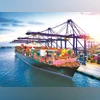
shipping
Industry players warn that the situation could quickly spiral into higher fuel costs and put pressure on the rupee.
Dhruvaksh Saha New Delhi
6 min read Last Updated : Jun 22 2025 | 11:52 PM IST
Shippers and logistics firms in India — key to the export–import (exim) trade — now fear no quick relief from the global shipping crisis in the Strait of Hormuz, which now is at the verge of closure. This follows the US bombing of three Iranian nuclear sites on Sunday and subsequent Iranian strikes on Israel.
 
“Freight rates have started rising, and the situation is volatile. With the US hitting critical Iranian nuclear sites, retaliation is expected, and tensions will stay high. This will affect oil prices and shipping charges. War risk premiums are already being added to shipments. Exporters have started feeling the heat in both air and sea freight,” said Dushyant Mulani, chairman of the Federation of Freight Forwarders’ Associations in India.
 
Iran's Supreme National Security Council will reportedly make a final decision on the strait after its parliament approved its closure on Sunday.
 
While the decision is not final as of Sunday evening, Iranian high command has reportedly said that it's on the agenda and will done whenever necessary.
 
The Strait of Hormuz — one of the busiest maritime corridors, carrying roughly 20 per cent of global crude oil — has been impacted by the Iran–Israel conflict for nearly two weeks.
 
“Conflict in West Asia has seen elevated risk and associated operational costs for ocean container shipping trades transiting the Arabian Gulf, such as security measures, higher bunker fuel prices, and burning more fuel due to faster sailing through high risk areas. This has contributed to a 55 per cent increase in average spot rates on the trade from Shanghai to Jebel Ali — the Arabian Gulf’s largest port — compared to one month ago. Average spot rates now stand at $2,761,” said Peter Sand, chief analyst at Oslo-based market intelligence firm Xeneta.
 
Meanwhile, exporters in India have urged the commerce and industry ministry to reroute shipments to Central Asia via Chabahar Port, instead of the widely used Bandar Abbas port in Iran, which has been affected by the crisis, said officials aware of the developments. 
 
Industry players warn that the situation could quickly spiral into higher fuel costs and put pressure on the rupee. “Beyond oil, container and bulk cargo moving through the Red Sea and the Gulf are delayed by rerouting, rising insurance premiums, and logistical bottlenecks. Exporters in India, especially in sectors like basmati rice, pharmaceutical, and engineering goods, are dealing with delays and margin pressures. Some shipments to Iran have already seen freight premiums rise by 20 per cent, while overall sea–air logistics costs are climbing sharply,” said Jitendra Srivastava, chief executive officer of Triton Logistics & Maritime.
 
To manage the crisis, firms have strengthened cooperation with global maritime authorities to focus on port security, risk coverage, and regulatory alignment. Some have also started nearshoring supply chains and building buffer inventories, he added.
 
Trump effect cooling
 
Meanwhile, the frenzy caused by the Trump tariff saga appears to be easing. For the first time in more than a month, London based Drewry’s World Container Index fell 7 per cent to $3,279 per 40 feet container between June 12 and 19, after six weeks of gains. This drop came amid weaker US bound demand.
 
“Rates from Indian ports, which were firm due to supply chain disruption and strong outbound demand, are now easing. This reflects a broader market adjustment as trade flows stabilise and carriers regain operational capacity. Chartering rates have also come under pressure over the past month. Increased vessel supply and a slowdown in global trade activity have pushed down prices across the container, bulk, and tanker segments,” said Srivastava.
 
According to Sand, some powerful shippers are starting to push back against higher rates. “Spot rates have peaked, but we could see fluctuations between now and the end of the 90-day lowering of tariffs on US imports from China on 13 August and the rest of the world on 9 July. Until that point, spot rates should remain above the levels seen in May prior to ‘Liberation Day’. Looking further ahead, demand is expected to drop significantly, even if lower tariffs continue after the 90-day pause. Shippers have been front loading imports throughout 2024 and early 2025, so inventories will be brimming once the current cargo rush is over,” said Sand. 
The challenges
  *  Industry players warn situation could spiral into higher fuel costs and put pressure on rupee 
  *  55% increase in average spot rates on the trade from Shanghai to Jebel Ali, said Peter Sand, chief analyst at Xeneta
  *  Costs rising due to higher bunker fuel prices, enhanced security measures
  *  Some shipments to Iran have already seen freight premiums rise by 20%, industry experts pointed out 
 
50% of India’s crude imports via Strait of Hormuz: Icra
  The Strait of Hormuz is one of the world’s most critical maritime trade routes, moving 20 million barrels per day (bbl/d) or about 20 per cent of global petroleum consumption in 2024, according to the US Energy Inform­ation Adminis­tration. It also ships 25 per cent of global LNG supplies. 
Repeated tensions in the area had seen the volume of crude oil and condensate transiting the Strait of Hormuz declining by 1.6 million bbl/d between 2022 and 2024. According to Investment Information and Credit Rati­ng Agency (Icra), around 45–50 per cent of India’s crude oil imports and 54-60 per cent of inbound natural gas pass through the corridor. 
Experts note the warfare before the closure itself has contributed to a 55 per cent increase in average spot rates on the trade from Shanghai to Jebel Ali — the Arabian Gulf’s largest port — compared to one month ago. Average spot rates now stand at $2,761 per container. Shipments to Iran have seen freight premi­ums rise by 20 per cent, while overall sea-air logistics costs are climbing rapidly. Iran is also the gateway for India’s Cen­tral Asian trade.  Closure of the strait means rerouting cargoes around Africa and the Cape of Good Hope, putting pressure on fuel prices, inflation, and the rupee.
 

One subscription. Two world-class reads.

Already subscribed? Log in

Subscribe to read the full story →
*Subscribe to Business Standard digital and get complimentary access to The New York Times

Smart Quarterly

₹900

3 Months

₹300/Month

SAVE 25%

Smart Essential

₹2,700

1 Year

₹225/Month

SAVE 46%
*Complimentary New York Times access for the 2nd year will be given after 12 months

Super Saver

₹3,900

2 Years

₹162/Month

Subscribe

Renews automatically, cancel anytime

Here’s what’s included in our digital subscription plans

Exclusive premium stories online

  • Over 30 premium stories daily, handpicked by our editors

Complimentary Access to The New York Times

  • News, Games, Cooking, Audio, Wirecutter & The Athletic

Business Standard Epaper

  • Digital replica of our daily newspaper — with options to read, save, and share

Curated Newsletters

  • Insights on markets, finance, politics, tech, and more delivered to your inbox

Market Analysis & Investment Insights

  • In-depth market analysis & insights with access to The Smart Investor

Archives

  • Repository of articles and publications dating back to 1997

Ad-free Reading

  • Uninterrupted reading experience with no advertisements

Seamless Access Across All Devices

  • Access Business Standard across devices — mobile, tablet, or PC, via web or app

Topics :Shipping industryIsrael Iran Conflictmaritime sectortradeMiddle EastSupply chain

Next Story



