Home / Industry / News / When Swraj Paul met Maruti's R C Bhargava, setting stage for India foray
When Swraj Paul met Maruti's R C Bhargava, setting stage for India foray
Bhargava said he (Paul) and his team decided to bring themselves as a JV partner and Caparo Maruti was born in 1994
premium
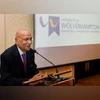
While Bhargava and Paul preferred to have lunch together, they never met in any social do. And he never asked Paul about his earlier experience in India. He did not have too many business friends. | (Photo: PTI)
2 min read Last Updated : Aug 22 2025 | 10:38 PM IST
It was in the early 1990s when R C Bhargava, then managing director of carmaker Maruti Udyog (now Maruti Suzuki), had a business meeting with industrialist Swraj Paul, a London-based non-resident Indian.
Paul was scouting around to make a foray into India after his bitter and hostile bid to buy Escorts and DCM failed in the previous decade and was exploring whether he could get into the components business with Japanese giant Suzuki, a shareholder in Maruti Udyog.
“I don’t remember the exact year but he met me because he clearly saw a lot of potential in the country and wanted to start something in manufacturing. It was through these discussions that the idea of a joint venture (JV) with his Caparo group was mooted,” said Bhargava, now chairman of Maruti Suzuki.
Bhargava said he (Paul) and his team decided to bring themselves as a JV partner and Caparo Maruti was born in 1994. Paul took a 75 per cent stake while the rest went to Maruti. Two factories in Gurgaon and Bawana were set up, making sheet metal stamping, weld assemblies, and coating and door hemming for the car company.
The JV has endured and Caparo has expanded in India in a big way, said Bhargava. “It has become their mainstay because there is not much scope of growth in the United Kingdom or even in the United States.”
While Bhargava and Paul preferred to have lunch together, they never met in any social do. And he never asked Paul about his earlier experience in India. He did not have too many business friends.
Despite Paul getting membership in the House of Lords in 1996, Bhargava said he did not have airs and graces, and was polite and friendly. He continued to have a lot of connections in government as well as with politicians here and would meet them every time he came to India, which was once or twice a year. And he also interacted with a lot of his relatives, many of whom were in India and doing business. But Paul of course left a bigger mark in India’s corporate history for his unsuccessful takeover bid.




