Lower crude oil prices point to further downsides for ONGC stock

For ONGC Videsh or OVL, oil and gas production in the quarter stood at 1.75 mmt (down 2 per cent Q-o-Q) and 0.7 bcm (down 13 per cent Q-o-Q)
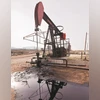
ONGC, crude oil
Value added products or VAP sales stood at 616 thousand metric tonne or tmt and was below estimates.
Devangshu Datta Mumbai
4 min read Last Updated : Aug 14 2025 | 11:07 PM IST
ONGC's April-June quarter of 2025-26 (Q1FY26) results were disappointing but the hopes of production growth down the line and ONGC Petro additions (OPaL) moving towards breakeven could keep investors interested. Standalone oil sales were down 3 per cent quarter-on-quarter (Q-o-Q) and gas was flat Q-o-Q while lower oil price realisation of $66.1 per barrel in Q1 vs $73.7 per barrel in Q4FY25 resulted in revenues of ₹32,000 crore , down 9 per cent Q-o-Q and slightly below consensus. 
The operating profit of ₹18,660 crore down 2 per cent Q-o-Q was slightly better than consensus. Net profit stood at ₹8,020 crore, up 24 per cent Q-o-Q but below consensus. Interest rate and debt are both going down. 
Analysts are assuming 4-5 per cent volume growth in oil and gas production in FY26. Apart from possible delays in production ramp up, a key risk is decline in oil prices where every $5 per barrel change in oil price realisation, will reduce consolidated earnings per share (EPS) by 8-9 per cent. 
Standalone oil production for the quarter stood at 4.93 metric million tonne or mmt from own fields and the share from joint ventures or JVs stood at 0.31 mmt while both combined remained flat Q-o-Q. Standalone gas production for the quarter stood at 4.85 billion cubic metres or bcm from own fields and 0.12 bcm from JVs. Overall gas production registered a 1 per cent decline Q-o-Q. 
For ONGC Videsh or OVL, oil and gas production in the quarter stood at 1.75 mmt (down 2 per cent Q-o-Q) and 0.7 bcm (down 13 per cent Q-o-Q). OVL’s revenue was ₹2,450 crore, and profit before depreciation and taxes stood at ₹450 crore. A change in the accounting method has led to a sharp decline in Y-o-Y revenue for OVL. However, OVL is receiving profits via JVs. 
The guidance is for 19.93 mmt oil and 20.11 bcm gas in FY26, rising to 21 mmt oil and 21.49 bcm gas in FY27. Guidance given on the previous call for FY26 standalone was 21.5mmt oil and 21 million tonnes of oil equivalent or mmtoe gas. The FY27 standalone production guidance was 22mmtoe gas. 
The operating expenditure or opex rose due to higher cost in the KG basin where current output is 30 kbpd (1,000 barrels) of oil and 3 million metric standard cubic meters per day or mmscmd gas and expected to ramp up to 6-7mmscmd by Jan/Feb’26. The FY26 capex target is maintained at ₹32,000-35,000 crore (₹8,000-10,000 crore for exploration, ₹15,000 crore on infrastructure and ₹10,000 crore on drilling). 
The collaboration with BP in Mumbai High is expected to show output from Q4FY26. OPaL is running at 90 per cent utilisation, and operating profit turned positive (₹13 crore) with no further equity infusions required. OPaL will start ethane usage from FY28. ONGC is planning to own ships for ethane transport. 
Mozambique remains under force majeure although it is expected to be lifted in September. Current North Western or NW gas is 2.6 bcm (13-14 per cent) and in FY27, NW gas shall be 4.8bcm (24-25 per cent). 
Value added products or VAP sales stood at 616 thousand metric tonne or tmt and was below estimates. Reported oil realisation was $66.1 per barrel, representing a $0.9 per barrel discount to Brent during the quarter. Deferred Depletion Allowance, dry well write-offs, and survey costs stood above estimates, while other income came in below estimate, impacting profitability. Since June, 2024 when Brent oil prices were $83 per barrel, it has corrected 23 per cent. 
Strong volume growth guidance by ONGC, after years of under-investment and poor volume trends, has driven investor enthusiasm. But in the past few quarters, ONGC has struggled to raise production with no meaningful gains. This is the key monitorable. Benefits of increased new well gas proportion for ONGC will be offset by low gas realisation given the link to lower crude. Oil prices may remain under pressure amid record-high Opec+ spare capacity and surplus global supply. This also risks impairments, especially for ONGC’s overseas assets. 
Most analysts are assuming a scenario of crude at $65 per barrel in FY26 and first half FY27, and there are downside risks. 
 

One subscription. Two world-class reads.

Already subscribed? Log in

Subscribe to read the full story →
*Subscribe to Business Standard digital and get complimentary access to The New York Times

Smart Quarterly

₹900

3 Months

₹300/Month

SAVE 25%

Smart Essential

₹2,700

1 Year

₹225/Month

SAVE 46%
*Complimentary New York Times access for the 2nd year will be given after 12 months

Super Saver

₹3,900

2 Years

₹162/Month

Subscribe

Renews automatically, cancel anytime

Here’s what’s included in our digital subscription plans

Exclusive premium stories online

  • Over 30 premium stories daily, handpicked by our editors

Complimentary Access to The New York Times

  • News, Games, Cooking, Audio, Wirecutter & The Athletic

Business Standard Epaper

  • Digital replica of our daily newspaper — with options to read, save, and share

Curated Newsletters

  • Insights on markets, finance, politics, tech, and more delivered to your inbox

Market Analysis & Investment Insights

  • In-depth market analysis & insights with access to The Smart Investor

Archives

  • Repository of articles and publications dating back to 1997

Ad-free Reading

  • Uninterrupted reading experience with no advertisements

Seamless Access Across All Devices

  • Access Business Standard across devices — mobile, tablet, or PC, via web or app

Topics :The CompassONGCMarketsCrude Oil PricesQ1 results

Next Story



