Pepsico bottler Varun Beverages (VBL) reported topline growth of 29 per cent and volume growth of 30 per cent on a year-on-year (Y-o-Y) basis in Q1CY25. However, there was a decline in consolidated realisation due to lower realisation in brands in South Africa.
The company’s revenue touched ₹5,680 crore, while gross profit stood at ₹3,151 crore, up 25.5 per cent Y-o-Y with a gross margin of 55.5 per cent, down 161 basis points Y-o-Y. The earnings before interest, taxes, depreciation, and amortisation (Ebitda) margin also dropped by 20 bps on a Y-o-Y basis while Ebitda surged to ₹1,264 crore, up 28 per cent Y-o-Y.
The organic volume growth was 15.5 per cent Y-o-Y apart from the consolidation of South Africa & DRC (Democratic Republic of Congo).
The realisation remained flat Y-o-Y at ₹178 per case. The volume growth was seen across domestic market and international markets. The carbonated soft drinks, juices, water volumes grew 38 per cent, 22 per cent, and 6 per cent respectively Y-o-Y to 234 million cases, 22 million cases, and 56 million cases, respectively.
The Ebitda margin was at 22.7 per cent in Q1CY25, with the consolidation of South Africa business (SA margins are low due to the high proportion of owned brands).
VBL is confident of clocking double-digit growth for CY25, backed by capacity expansion in Himachal Pradesh and Uttar Pradesh. In addition, two more facilities will be in production by May.
The management expects double-digit growth in the long term and 21 per cent Ebitda margins in India. VBL is focused on putting in more visi coolers to improve distribution penetration.
While the integration of South Africa has gone well, margins remain low. The company aims to drop some of the non-profitable products in this market and increase PepsiCo’s portfolio.
The management pointed to a shift in consumer preferences toward healthier products, including Nimbooz, which is recording 100 per cent Y-o-Y growth. The energy drinks witnessed strong traction, being the fastest-growing segment.
The share of low-sugar and no-sugar products rose to 59 per cent of consolidated sales volumes in Q1CY25, reflecting the shift in preferences. The company has launched a new energy drink, Sting Gold, and a Jeera-based beverage is expected to launch by the end of Q2CY25, expanding the portfolio. In Zimbabwe and Zambia, VBL is distributing and selling PepsiCo’s snack products and sees growth opportunities in packaged foods.
The management says competitive intensity is pushing growth, with visi cooler penetration increasing. VBL reaches 4 million-plus retail outlets out of 12 million in India, highlighting room for distribution expansion. The management does not foresee significant raw material cost pressures and packaging costs are lower due to cheaper oil.

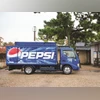 "Varun Beverages ready to bottle in gains on robust volume growth")












 Connect with us on WhatsApp