Volume recovery, attractive valuation positive triggers for Petronet LNG

Adjusted PAT, excluding the impairment adjusted for tax, was ₹945 crore in Q1FY26. Reported PAT of ₹842 crore includes the impairment
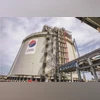
Petronet LNG
The management said the drop in volumes at Kochi was due to a 1.5-month shutdown at a plant, which reduced off-take
Devangshu Datta
4 min read Last Updated : Aug 26 2025 | 10:57 PM IST
Petronet LNG delivered a fairly strong performance during the April-June quarter (Q1) of FY26, but the stock has seen a correction.
 
Revenue was reported at ₹11,880 crore, while earnings before interest, taxes, depreciation and amortisation (Ebitda) stood at ₹1,160 crore. Profit after tax (PAT) was lifted by higher other income. Total volumes came in above estimates, due to higher third-party and service cargos.
 
In Q1FY26, Dahej throughput was down 16.5 per cent year-on-year (Y-o-Y) to 207 trillion British Thermal Unit (TBTU). Kochi throughput was 13TBTU, 7.1 per cent lower. Total volumes were down 16 per cent at 220TBTU.
 
There is an impairment provision of ₹138 crore in Q1FY26, against unit of production (UoP) dues and the same provision was also taken in Q4FY25.
 
Adjusted PAT, excluding the impairment adjusted for tax, was ₹945 crore in Q1FY26. Reported PAT of ₹842 crore includes the impairment.
 
The stock has corrected with investors expecting decline in tariffs at Dahej and Kochi in FY28, with little room for later tariff hikes and fears that competing terminals may cut market share.
 
However, these assumptions may not be realistic. Competing terminals have low utilisation and were built at far higher costs compared to Dahej, which is moreover expanding capacity. The market also seems to be braced for a big tariff cut, which may be unrealistic. 
 
Demand for LNG remains strong — projections by the regulator suggest that India will have to double LNG imports by 2030 to meet demand.
 
Gas demand has a historical compound annual growth rate (CAGR) of around 6-7 per cent and imports may rise by around 6 per cent even taking into account projected higher production from KG D6 and KG 98/2.
 
There’s also likely softness in global LNG prices in the medium-term due to massive scale up in global LNG production capacity. This makes imports attractive. Dahej expansion was low cost and Kochi may also ramp up and a third jetty is on the cards.
 
The management said the drop in volumes at Kochi was due to a 1.5-month shutdown at a plant, which reduced off-take.
 
The capex guidance is ₹5,000 crore for FY26, primarily for a third jetty, and an upcoming petrochemical complex, along with an LNG terminal at Gopalpur (₹300 crore), a new corporate office, and 25-plus compressed biogas (CBG) plants (₹100 crore). Capex in FY27 will exceed that in FY26. In Q1, inventory gain stood at ₹42 crore. Trading gains were nil.
 
Rega's contribution stood at ₹640 crore. The Gopalpur terminal is 35 km from a major trunk pipeline owned by GAIL and can be easily connected. Petronet expects spot LNG prices to settle below $10/mmbtu next year.
 
Analysts say approved capex for the petrochemical project and the Gopalpur LNG terminal is on the higher side but actual capex could be lower if the projects are completed on schedule.
 
Demand for Gopalpur’s gas terminal could be from steel plants, aluminium plants, city gas distribution (CGD) companies, and refiners.
 
The Dahej expansion will increase capacity from 17.5 million tonnes per annum (mtpa) to 22.5 mtpa and is scheduled to be completed by December 2025.
 
Given 110 per cent utilisation, Dahej may process up to 25 mtpa of LNG annually. Once the Kochi–Bangalore pipeline is connected, demand for the Kochi terminal will fall under the lower zone-1 tariff.
 
For Dabhol terminal, zone-2 classification applies, which is advantageous for Petronet.
 
The third jetty project remains on track for completion by 2027.
 
This will be capable of handling LNG, ethane, and propane.
 
ONGC has already tied up with Petronet for ethane imports.
 
The company expects outstanding use-or-pay dues of ₹690 crore (from 2022) to be cleared by the end of 2025.
 
PLNG’s market share in LNG imports slipped to 69 per cent in FY25. But market share could rise again as new Dahej capacity comes online.
 
Post correction, valuations may look quite tempting and dividend yield is around 4 per cent at the current market price.
 
Some analysts project a 50 per cent rebound from current prices.
 

One subscription. Two world-class reads.

Already subscribed? Log in

Subscribe to read the full story →
*Subscribe to Business Standard digital and get complimentary access to The New York Times

Smart Quarterly

₹900

3 Months

₹300/Month

SAVE 25%

Smart Essential

₹2,700

1 Year

₹225/Month

SAVE 46%
*Complimentary New York Times access for the 2nd year will be given after 12 months

Super Saver

₹3,900

2 Years

₹162/Month

Subscribe

Renews automatically, cancel anytime

Here’s what’s included in our digital subscription plans

Exclusive premium stories online

  • Over 30 premium stories daily, handpicked by our editors

Complimentary Access to The New York Times

  • News, Games, Cooking, Audio, Wirecutter & The Athletic

Business Standard Epaper

  • Digital replica of our daily newspaper — with options to read, save, and share

Curated Newsletters

  • Insights on markets, finance, politics, tech, and more delivered to your inbox

Market Analysis & Investment Insights

  • In-depth market analysis & insights with access to The Smart Investor

Archives

  • Repository of articles and publications dating back to 1997

Ad-free Reading

  • Uninterrupted reading experience with no advertisements

Seamless Access Across All Devices

  • Access Business Standard across devices — mobile, tablet, or PC, via web or app

Topics :Petronet LNGstock market tradingThe Compass

Next Story



