A world much like the 1930s: Echoes of war, tariffs, and autocracy

But three key differences make today even more alarming
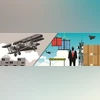
A world much like the 1930s: Echoes of war, tariffs, and autocracy
Illustration: Binay Sinha
Devangshu Datta
4 min read Last Updated : Mar 22 2025 | 12:34 AM IST
Many historians have noted similarities between the current state of the world and the 1930s. The parallels are obvious, but there are also major differences. The 1930s saw authoritarian regimes in control in many countries, including Germany, the Soviet Union, Italy, Hungary, and Japan, apart from the existence of colonial empires. 
 
The world had survived a pandemic (the so-called Spanish Flu). It was enduring a depression that started in 1929. One outcome of the Great Depression was trade wars. Every nation tried to protect domestic industry by following a mercantilist policy, imposing duties and tariffs on imports. The global outcome was “beggar myself and my neighbour”. Unemployment skyrocketed. Germany and Austria suffered hyperinflation, while the US endured deflation. 
 
The proliferation of authoritarian regimes led to all sorts of misery. One of those regimes inflicted deliberate famine and mass deportations in the USSR. Another created extermination centres in regions under Nazi control. A third inflicted mass rape and slaughter on China’s civilians.
 
As in 2025, there were also many large, local conflicts in the 1930, such as the Spanish Civil War and the Sino-Japanese War. These regional wars escalated eventually into a global conflict. Germany gobbled up Austria, Czechoslovakia, and triggered a pan-European war by attacking Poland.
 
The Soviet Union seized three Baltic nations (Estonia, Latvia and Lithuania), roughly half of Poland and tried to grab Finland as well. After taking a huge chunk of China, Japan attacked Pearl Harbor and annexed The Philippines, Indonesia, Burma, Indo-China, and a bunch of Pacific islands. During World War II, an estimated 100 to 125 million people perished, with nuclear weapons being used and global maps rewritten.
 
Another parallel is trade wars. Trade and tariff wars are peculiar in that they can escalate even when everybody knows that they are counter-productive. If one nation, say, a North Korea decides to close its borders to goods and services, that nation suffers. If many nations close their borders to one another, the whole world suffers. This happened in the 1930s and it looks set to happen again. The cycle of global trade wars in the 1930s was only disrupted by the Second World War. What will it take to halt the current spiral into repeated rounds of tariffs and counter-tariffs?
 
There are two or three new ingredients that may cause additional alarm in 2025. One is the proliferation of nuclear weapons. There are eight countries with declared nuclear arsenals at the moment, and there are very likely at least two more crypto-nuclear nations. Many of these nations have authoritarian, or wannabe authoritarian regimes, and at least five are engaged in territorial disputes, which have led to several rounds of armed conflicts. The risk of nuclear escalation is real.
 
A second difference is the imminent threat of climate change. Climate change is an existential threat and perhaps, even more dangerous than nuclear proliferation. No such threat existed in the 1930s. It obviously does now as every year brings record-breaking high temperatures, and the Arctic map has been redrawn by melting ice.
 
Talk to anybody who works in the insurance industry, and specifically in the “NatCat” (natural catastrophe) and reinsurance segments. Payouts have skyrocketed across the world due to extreme weather events, and reinsurers have struggled with solvency issues. Changes in weather patterns and melting ice are not just likely to trigger large-scale extinctions. These also create conditions where food security becomes a question mark.
 
Neil DeGrasse Tyson estimated there was something like a 97 per cent consensus in the scientific community about climate change, its causes and effects. Unfortunately, the other 3 per cent are  the ones cited by regimes that stand to gain in the short-term from denying that climate change is real. The world might run out of time when it comes to climate change mitigation. Maybe it is already too late.
 
The third new element is Artificial Intelligence. It’s hard to tell where AI could lead. It could be an existential threat — imagine AIs in charge of nuclear arsenals, for example. AI is already a disrupter of the economic order. But AI could also be a tool for salvation if it does find technical solutions to climate change by enabling breakthroughs in fusion power, helps develop new crops suited to changing climate, and reduces the threat of species extinction.

One subscription. Two world-class reads.

Already subscribed? Log in

Subscribe to read the full story →
*Subscribe to Business Standard digital and get complimentary access to The New York Times

Smart Quarterly

₹900

3 Months

₹300/Month

SAVE 25%

Smart Essential

₹2,700

1 Year

₹225/Month

SAVE 46%
*Complimentary New York Times access for the 2nd year will be given after 12 months

Super Saver

₹3,900

2 Years

₹162/Month

Subscribe

Renews automatically, cancel anytime

Here’s what’s included in our digital subscription plans

Exclusive premium stories online

  • Over 30 premium stories daily, handpicked by our editors

Complimentary Access to The New York Times

  • News, Games, Cooking, Audio, Wirecutter & The Athletic

Business Standard Epaper

  • Digital replica of our daily newspaper — with options to read, save, and share

Curated Newsletters

  • Insights on markets, finance, politics, tech, and more delivered to your inbox

Market Analysis & Investment Insights

  • In-depth market analysis & insights with access to The Smart Investor

Archives

  • Repository of articles and publications dating back to 1997

Ad-free Reading

  • Uninterrupted reading experience with no advertisements

Seamless Access Across All Devices

  • Access Business Standard across devices — mobile, tablet, or PC, via web or app

Topics :BS OpiniontariffsUkraine civil warGaza conflict

Next Story



