Tension between India and the US seems to be easing, with President Donald Trump greeting Prime Minister Narendra Modi on his birthday and expressing interest in working together. US officials also visited India to work on the trade deal, and corridors of power are buzzing with speculation on what the final norms of the trade deal will look like.
The chief complaints of the Trump administration have centred on ‘higher’ tariffs charged by India on American goods and the trade surplus India enjoys with the US. India’s proximity to Russia is an additional factor rattling Washington.
In FY25, total bilateral trade between India and the US reached $131.84 billion, with India exporting goods worth $86.51 billion and importing $45.33 billion, resulting in a large trade surplus. The US is India’s largest trading partner, with key exports including pharmaceutical products, gemstones, and textiles.
Until April this year, and before the India-Pakistan war broke out in May, India-US ties were seemingly stable, with officials from both countries engaging in trade talks after an agreement to enact a Bilateral Trade Deal (BTA) during Prime Minister Narendra Modi’s US visit in February. Now, ties have hit a speed bump, damaging the mutual trust and respect built over the past two decades.
So how did both countries suddenly fall apart? Was it high tariffs, India’s reluctance to open its agriculture market, or the Russian oil connection that forced the Trump administration to ‘punish’ one of the world’s fastest-growing economies? Did Trump’s ambition to win a Nobel Peace Prize also come into play? Or has deep mistrust again come to the fore? All these factors might have pushed the relationship into negative territory.
It is a fact that successive US governments have sought access to India’s agricultural markets, along with secondary demands that India buy more goods and services. Washington has often singled out India for levying high tariffs and has repeatedly raised concerns over India’s closeness to Russia. These may have weakened ties, but there was likely an immediate cause behind the US suddenly upping the ante.
The real story began when Trump took credit for nudging arch-rivals India and Pakistan to stop escalation. India never subscribed to his repeated claims of being instrumental in preventing a war, which he said was about to snowball into a nuclear crisis. India’s repeated denials of its role in the ceasefire with Pakistan irritated him, while Pakistan quickly subscribed to his assertions. Pakistan Army Chief Asim Munir even travelled to the US for lunch on Trump’s invitation, much to India’s chagrin. Both countries grew frustrated as they stuck to conflicting narratives, further complicating matters. As differences brewed, both Modi and Trump took steps that aggravated the situation. Add to this Trump’s oft-stated desire to win a Nobel Peace Prize, and India’s refusal to acknowledge his role in the ceasefire utterly disappointed him. Combined with factors such as tariffs and Russian oil, Trump’s ego hardened, and he decided to ‘punish’ India by using tariffs as a tool for revenge.
The US resorted to higher tariffs, which has been the trademark of Trump’s second term.
That said, another factor dictating India-US relations is their foundation in mistrust, cynicism, and a marriage of convenience.
What unfolded after the India-Pakistan clash can be linked to deep-seated mistrust between the two nations. For instance, in 1971, relations were strained during the Indo-Pakistan war over Bangladesh’s liberation. The US supported Pakistan and sent its Seventh Fleet to the Bay of Bengal, threatening India. Washington also supplied military equipment to Pakistan and pushed an anti-India resolution in the United Nations Security Council. After the war and the Nixon administration’s stance, relations spiralled downward until 1991, when India cultivated close ties with the USSR. Following the USSR’s disintegration, India began to exercise an independent foreign policy. In 1998, after the Pokhran nuclear test, the US and allies imposed sanctions on India, further straining ties.
Relations began to improve with Bill Clinton’s presidential visit in March 2000. His path-breaking South Asia visit ended a turbulent period. In 1999, Clinton had also played a key role in ending the Kargil conflict between India and Pakistan.
The improvement continued through the George W Bush and Obama administrations. In Trump’s first term, no major aberrations appeared in bilateral relations. The China factor also played a role: Washington wanted to strengthen ties with India to counter Beijing, while India sought to diversify relations beyond Russia and push back against China. Here, the marriage of convenience came into play.
But in Trump 2.0, things have gone awry. It is natural for countries to face bumps in relations, as national interests often take precedence. But the trajectory of ties over the past few months indicates serious flaws driven by personal ambitions of leaders, deep mistrust, and convenience-based engagement.

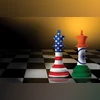 "India-US relations mired in tariffs, personal ambitions and mistrust")


 Connect with us on WhatsApp