Of talking cars and highways: India must focus on smart vehicles for safety

India has just 44 passenger cars per 1,000 people. While next-door China has 251. South Korea has 422, Japan 502, and Indonesia has 76 vehicles for every 1,000 people

AI traffic management India, NHAI AI traffic system, Dwarka Expressway smart highway, connected vehicles India, intelligent transport systems India, V2X technology India, smart cars India adoption, India car market growth 2030, traffic congestion sol
India must embrace V2X technologies even as it promotes the usage of small cars for traffic management and urban space utilisation
Pranjal Sharma
4 min read Last Updated : Jul 06 2025 | 10:55 PM IST
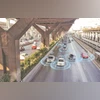
Highways are gradually levelling up to keep pace with the new intelligent breed of vehicles. It’s vice versa too. Recently, the National Highways Authority of India (NHAI) launched the country’s first artificial intelligence (AI) powered advanced traffic management system on New Delhi’s Dwarka Expressway. This will serve as a national model for AI-based traffic safety and governance.
 
AI-connected cameras on the expressway will be able detect about 14 types of traffic and safety violations. This will be managed by a control centre and coordinated with relevant authorities. The government plans to replicate this system across the country for new highways in the ensuing months.
 
India is one of the fastest growing passenger car markets in the world. Due to low market penetration, its potential to grow is perhaps the highest. The country has just 44 passenger cars per 1,000 people. While next door China has 251. South Korea has 422, Japan 502, and Indonesia has 76 vehicles for every 1,000 people.
 
So if India manages to double this penetration in the next few years, it would put tremendous pressure on the road network, especially on urban agglomerations. Even though the number of highways is growing, India needs intelligent traffic management systems that can bring order on roads. 
 
Growth without gridlocks 
 
Growth in India would have to be driven by smart vehicles that integrate seamlessly with smart highways. Connected cars that can navigate smart cities and AI-based traffic management should be the future for India. The country will have to depend on smart cars to ensure it manages growth without gridlocks. As the Indian passenger car market is set to grow from 4 million per year to about 6 million by 2030, a technology-focused approach will help manage growth.
 
UN body International Telecommunication Union (ITU) has been advocating the use of connected smart cars for reducing traffic and managing congestion on roads.
 
Connected and Automated Vehicle (CAV) technologies process vast amounts of data, for insights into traffic behaviour, road quality, and driver behaviours.
 
“From intelligent vehicles to seamless communication between road users and infrastructure, the transformation of mobility systems is accelerating. Total vehicle automation is being enabled by global standards that lay the foundation for modern vehicular communications and intelligent transport systems (ITS),” an ITU statement says.
 
“New mobility systems can prevent accidents, reduce fatalities and enable smart traffic management. Vehicle-to-everything (V2X) technologies are also expected to improve traffic flow, reduce carbon emissions, and enable infrastructure upgrades to boost the digital economy.”
 
India must embrace V2X technologies even as it promotes the usage of small cars for traffic management and urban space utilisation.
 
Seamless communication 
 
ITU says that the development of V2X, connected and automated vehicles (CAV), and intelligent transport systems (ITS) requires complex technical and policy collaboration spanning the automotive, transportation, telecom and tech industries, along with the electronics, energy and security sectors.
 
Indian policy makers must look at vehicle usage from the smart technology lens. Connected cars are computers on wheels. Such technologies will automatically enable fuel efficiency, emissions and passenger safety.
 
The global ITS market is projected to reach $ 170 billion by 2034, growing from $ 48 billion in 2024 according to Future Market Insights, a research firm. By curtailing idling time and creating better routes, ITS helps improve vehicle efficiency. Not just passenger cars, all categories of vehicles on road will need smarter management systems that include tracking driver behaviour.
 
Just as India moved from feature phones to smartphones, the time has come that the country must focus on smart vehicles that can improve traffic flows and ensure road safety in cities and on highways.   

One subscription. Two world-class reads.

Already subscribed? Log in

Subscribe to read the full story →
*Subscribe to Business Standard digital and get complimentary access to The New York Times

Smart Quarterly

₹900

3 Months

₹300/Month

SAVE 25%

Smart Essential

₹2,700

1 Year

₹225/Month

SAVE 46%
*Complimentary New York Times access for the 2nd year will be given after 12 months

Super Saver

₹3,900

2 Years

₹162/Month

Subscribe

Renews automatically, cancel anytime

Here’s what’s included in our digital subscription plans

Exclusive premium stories online

  • Over 30 premium stories daily, handpicked by our editors

Complimentary Access to The New York Times

  • News, Games, Cooking, Audio, Wirecutter & The Athletic

Business Standard Epaper

  • Digital replica of our daily newspaper — with options to read, save, and share

Curated Newsletters

  • Insights on markets, finance, politics, tech, and more delivered to your inbox

Market Analysis & Investment Insights

  • In-depth market analysis & insights with access to The Smart Investor

Archives

  • Repository of articles and publications dating back to 1997

Ad-free Reading

  • Uninterrupted reading experience with no advertisements

Seamless Access Across All Devices

  • Access Business Standard across devices — mobile, tablet, or PC, via web or app

Topics :BS OpinionCarsTechnologyAuto industry

Next Story