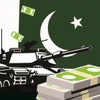
Off the cricket pitch, Pakistan has outplayed India on the world stage

The Chinese might have lost some enthusiasm for their "iron friends" in Islamabad and Rawalpindi, but they are not turning off the tap completely

pakistan military budget
With the United States (US), the Pakistanis have managed to eke out a relatively favourable trade agreement that reduced tariffs on the country to 19 per cent from the earlier 29 per cent; and also secured US investment in the country’s supposed fossil-fuel reserves. (Illustration: Ajaya Mohanty)
Mihir S Sharma
5 min read Last Updated : Oct 03 2025 | 10:52 PM IST
The Islamic Republic of Pakistan, by all objective criteria, is a basket case of a state — and should therefore be ignored and dismissed on the world stage. Instead, its leaders have been received warmly in recent weeks by both the American and Chinese Presidents, signed new agreements to boost inward investment, and finalised a landmark defence deal with Saudi Arabia. Tilak Varma might have stayed in to hit a six in the final over and win the Asia Cup for India, but in the game of geopolitics, it is Asim Munir and Shehbaz Sharif who have, as cricket commentators too often say, played a blinder.  
Let’s run quickly down the Pakistani establishment’s recent achievements. In spite of India receiving a reasonable amount of support following the brutal terrorist attack on tourists in Pahalgam earlier this year, the Pakistanis nevertheless managed to minimise the expressions of support for Indian actions in Operation Sindoor. Its military managed to make the case globally that they held off Indian attacks, even setting off some ill-advised comparisons between Chinese and Western weapons platforms.  
With the United States (US), the Pakistanis have managed to eke out a relatively favourable trade agreement that reduced tariffs on the country to 19 per cent from the earlier 29 per cent; and also secured US investment in the country’s supposed fossil-fuel reserves. Its army chief has met President Donald Trump twice in recent times, once for a longer-than-expected lunch and once with Prime Minister Shahbaz Sharif, during which the President was shown a display of the critical minerals and rare earths that Pakistan (also supposedly) possesses. What is certain is that the US Exim Bank has committed millions to financing mining projects in the country, including the gold and copper mine at Reko Diq. They have lavished praise on Mr Trump, nominating him for the Nobel Prize and so on — and the President seems to have developed a decided partiality for a country he once condemned as untrustworthy. A “tilt”, as they used to say in the 1970s.  
The Chinese might have lost some enthusiasm for their “iron friends” in Islamabad and Rawalpindi, but they are not turning off the tap completely. Mr Sharif’s visit to Beijing last month was accompanied by news that a new $8.5 billion deal for investment was signed — though how much of that will actually materialise and at what cost to the Pakistani public is not clear. We have never had answers to such questions about China’s big plans for Pakistan, of course. Some existing Chinese investments in the country have had to be co-financed or taken over by more traditional multilateral sources. But calmer relations with the US may in fact help China’s activity in Pakistan; there have been reports in that country’s press that a recent American delegation even expressed interest in investing in the Chinese-controlled port of Gwadar, perhaps by building a terminal there that could receive shipments of liquefied natural gas from the US.  
Even Russia, which should by any reasonable standard be grateful to India for not adding to its international isolation, has made a few startling statements of late. President Vladimir Putin has described Pakistan and Russia as “natural allies” and called Islamabad Moscow’s “traditional partner in Asia”. It’s hard to understand exactly where this is coming from, but then nobody ever really knows what Mr Putin is thinking at any point. The Russians even put New Delhi in the difficult position of accepting Pakistan as an “observer” in the Zapad military exercises in which the Indian military participated (alongside China and more than 15 other nations).  
And, finally, there was the bombshell news that Saudi Arabia and Pakistan have signed a defence agreement that includes mutual protection. We can disagree over whether this means that Rawalpindi’s nuclear umbrella has been extended to the Gulf. It is also the case that the two countries have a long history of security cooperation, with the Pakistani army as the senior partner. But it certainly represents something of an improvement over the past decade, during which Islamabad’s refusal to join Riyadh in its war against the Houthis in Yemen had caused a chill in relations. 
How has the Pakistani establishment — discredited, undemocratic, and profligate, running an economy that has signally failed to invest in itself and develop productive potential — managed this series of achievements? Partly it is because they are willing to make promises and pay rhetorical tributes to leaders like Mr Trump in a way that the Indian leadership simply cannot. But partly it is old-fashioned flexibility — finding ways in which they can be useful to multiple partners. New Delhi might have loudly welcomed an age of multipolarity, hedging, and strategic autonomy. But it seems the winner in that game is Islamabad, not us. 

One subscription. Two world-class reads.

Already subscribed? Log in

Subscribe to read the full story →
*Subscribe to Business Standard digital and get complimentary access to The New York Times

Smart Quarterly

₹900

3 Months

₹300/Month

SAVE 25%

Smart Essential

₹2,700

1 Year

₹225/Month

SAVE 46%
*Complimentary New York Times access for the 2nd year will be given after 12 months

Super Saver

₹3,900

2 Years

₹162/Month

Subscribe

Renews automatically, cancel anytime

Here’s what’s included in our digital subscription plans

Exclusive premium stories online

  • Over 30 premium stories daily, handpicked by our editors

Complimentary Access to The New York Times

  • News, Games, Cooking, Audio, Wirecutter & The Athletic

Business Standard Epaper

  • Digital replica of our daily newspaper — with options to read, save, and share

Curated Newsletters

  • Insights on markets, finance, politics, tech, and more delivered to your inbox

Market Analysis & Investment Insights

  • In-depth market analysis & insights with access to The Smart Investor

Archives

  • Repository of articles and publications dating back to 1997

Ad-free Reading

  • Uninterrupted reading experience with no advertisements

Seamless Access Across All Devices

  • Access Business Standard across devices — mobile, tablet, or PC, via web or app

Topics :BS OpinionPakistan India Pakistan relationsOperation Sindoor

Next Story