The false promise of SCO: No panacea for India's geopolitical challenges

India's enthusiastic participation in the SCO summit hosted by China was meant to signal to Washington that New Delhi has other options
SCO Summit, SCO, Modi, Narendra Modi
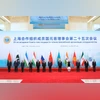
Participants of the Shanghai Cooperation Organization (SCO) summit pose for photos at the Meijiang Convention and Exhibition Center in Tianjin, China, Monday, Sept. 1, 2025.(Photo:PTI)
Sankalp Gurjar
5 min read Last Updated : Sep 04 2025 | 9:57 PM IST
The Shanghai Cooperation Organisation (SCO) has been the flavour of the season. Photos from the summit have taken social media by storm. If anything, the optics of the Tianjin summit are meant to send a message to the United States and Donald Trump. But beyond the symbolism, does the SCO carry any real significance for India? Should India place its bets on this organisation? 
Very few international organisations are named after a city in one of the participating countries. The Shanghai Cooperation Organisation is the most prominent among them. In recent weeks, India has been reeling under the shock of American tariffs and the rhetoric of Trump administration officials. With the shifting contours of American policy, even a club that includes China and Pakistan suddenly seems like a viable option for India. 
India’s enthusiastic participation in the SCO summit hosted by China was meant to signal to Washington that New Delhi has other options. The SCO and Brics have become synonymous with India’s strategic autonomy. For some, they also represent an assertion of India’s sovereignty and self-respect. The message appears to be that, in the face of American pressure, India will pivot towards other great powers such as Russia and China. Yet, this is also the right time to question the utility of the SCO for India’s geopolitical and geoeconomic future. 
The SCO is a club of Eurasian countries. It includes Russia, China, Iran, and Central Asian nations. India and Pakistan are also in the group. Unlike India, all of these countries are non-democratic and have questionable human rights record. They are also anti-Western in their foreign policy. Iran, Russia and China are touted to be members of the “axis of upheaval”. The Russian war in Ukraine has brought these three countries closer to one another. 
India is not anti-West but rather non-West. India has been at pains to underscore this point. However, the SCO is visibly anti-West in its posturing. In fact, the genesis of the organisation dates back to the time when these countries were concerned about the American dominance in world affairs. Although India is worried about the changes in American policy, the worldview in Delhi is not naturally aligned with those in Tehran, Moscow, or Beijing. 
Except China, none of these countries is a major economic partner for India. Russia became one after the invasion of Ukraine in 2022. If we take out Russian oil from the Indo-Russian bilateral trade, the overall trade figures are minuscule. The participation in the Eurasian Economic Union (EEU) cannot be compared with the free trade agreements with major economies like the United Kingdom and South Korea. Therefore, the SCO’s utility is limited in the economic domain. It was, and continues to be, primarily a political-security group. On that front, what does India get? 
India’s principal security challengers, China and Pakistan, are both part of the group. It is unlikely that the SCO will help in addressing either of these challenges. China is a dominant player within the organisation, and India’s difficult issues — such as the border standoff in Eastern Ladakh or Operation Sindoor — will never find a supportive, or even sympathetic, platform there. The prospect of China and Pakistan working in tandem against India remains real, despite the recent thaw in India–China ties.
 
As India celebrates the condemnation of Pahalgam terror attack in the latest SCO statement, it must be noted that the same joint statement also condemns the attack on Jaffar Express in Pakistan. Islamabad had blamed India for the attack. Therefore, beyond a symbolic mention of Pahalgam, the SCO’s condemnation of terrorism carries little strategic significance. The summit is big on political signalling but short on substance.
 
The Trump tariffs have underlined the necessity of economic leverage. Hence, the fundamental imperative is to transform India. The key for transforming India is to secure access to Western capital, technology and markets. This can be achieved only by engaging with the US, Europe, Australia and the East Asian countries. The SCO members are no match for these countries.
 
In the world of tariffs and trade protectionism, the traditional American partners are moving away from Washington. For India, the opportunity lies in fast-tracking the free trade agreement with the European Union (EU) and in deepening economic ties with the Southeast and East Asian countries. Even Latin America comes into play.
 
Despite the recent tussle, engaging with the US and finding a way out of the current impasse remains the more prudent course. It may not be a bad idea for India to absorb some of the costs of a trade deal with Washington. A continued downward spiral in Indo–US relations would leave New Delhi in an unenviable position. The deepening Sino–Pakistan axis and Pakistan’s renewed importance in American strategy are bad news for India. Yet the answer to this strategic dilemma is not to drift away from the US. The SCO offers no panacea for India’s geopolitical or geoeconomic challenges. India should be cautious.
 
The author teaches geopolitics and geoeconomics at the Gokhale Institute of Politics and Economics, Pune. The views are personal

One subscription. Two world-class reads.

Already subscribed? Log in

Subscribe to read the full story →
*Subscribe to Business Standard digital and get complimentary access to The New York Times

Smart Quarterly

₹900

3 Months

₹300/Month

SAVE 25%

Smart Essential

₹2,700

1 Year

₹225/Month

SAVE 46%
*Complimentary New York Times access for the 2nd year will be given after 12 months

Super Saver

₹3,900

2 Years

₹162/Month

Subscribe

Renews automatically, cancel anytime

Here’s what’s included in our digital subscription plans

Exclusive premium stories online

  • Over 30 premium stories daily, handpicked by our editors

Complimentary Access to The New York Times

  • News, Games, Cooking, Audio, Wirecutter & The Athletic

Business Standard Epaper

  • Digital replica of our daily newspaper — with options to read, save, and share

Curated Newsletters

  • Insights on markets, finance, politics, tech, and more delivered to your inbox

Market Analysis & Investment Insights

  • In-depth market analysis & insights with access to The Smart Investor

Archives

  • Repository of articles and publications dating back to 1997

Ad-free Reading

  • Uninterrupted reading experience with no advertisements

Seamless Access Across All Devices

  • Access Business Standard across devices — mobile, tablet, or PC, via web or app

Topics :Shanghai Cooperation OrganisationSCO summitIndia Foreign PolicyTrump tariffsBS Opinion

Next Story



