Tragedy and farce: Air India 171 crash calls for facts, not speculation

It is worth noting that it has been five years since the last large-scale civil aviation accident in India, the 2020 crash of Air India Express 1344 from Dubai to Kozhikode

Ahmedabad Plane Crash, Plane Crash
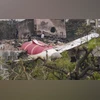
Remains of the crashed Air India plane lie on a building, in Ahmedabad, Friday, June 13, 2025. A London-bound Air India plane carrying 242 passengers crashed moments after taking off from the Ahmedabad airport on Thursday.(Photo: PTI)
Mihir S Sharma
5 min read Last Updated : Jun 13 2025 | 11:33 PM IST
We may not know for some time what led to Air India 171’s tragic crash just a few seconds after it took off. Crash investigations are some of the most comprehensive such inquiries carried out, and it is vitally important that we wait for this process rather than speculate. 
After all, there are some things that we already know: The class of aircraft in question, the Boeing 787 “Dreamliner”, has never previously been involved in a fatal incident — unlike, say, the same company’s controversial 737-MAX, which has suffered several crashes and been grounded more than once. It has been less than a fortnight since Boeing came to a deal with the United States (US) government to pay $1.1 billion in order to avoid prosecution for two past crashes of the 737-MAX. Critics of Boeing — of whom there are many — would say that the Dreamliner was developed when engineers rather than accountants ran the company, and so is a more reliable aircraft. Nevertheless, the company’s share fell 5 per cent after news of the crash broke. 
In other words, the reasons for this crash may wind up being more than usually difficult to ascertain. Any initial assumptions and statements may wind up being corrected over time; this is often the case with aviation accident investigations. 
It is worth noting that it has been five years since the last large-scale civil aviation accident in India, the 2020 crash of Air India Express 1344 from Dubai to Kozhikode — one of the “Vande Bharat” repatriation flights during the pandemic. And the one before that was a full decade earlier: Air India Express 812, flying from Dubai to Mangalore in 2010. 
Investigation into both these crashes revealed a startlingly similar pattern of behaviour -- an indictment, indeed, of both Air India Express and of the Airports Authority of India. Both the crashes involved planes landing at dangerous “tabletop” runways, which drop off sharply at the end of an artificially flattened hilltop. In both cases, the captain ignored the advice of a junior first officer to “go around”, or avoid landing, when it seemed that they were landing too far into the runway to avoid going off its end. Much of this could be explained by problematic human-resource practices within Air India Express, where the captains may have been international pilots or on deputation from Air India, and thought themselves superior to the Air India Express first officers. And in both cases, the end of the tabletop runway was improperly maintained, and so the aircraft were not slowed as they should have been. 
It is worth noting that the two Air India Express crashes were, till Thursday, the only major crashes this century, except for an Alliance Air crash in early 2000, killing 60. Given the many disasters that plagued Indian air travel to that point, the level of improvement in aviation safety in this country is worth noting. Even so, in those crashes, it is disheartening to see an echo of past problems. When Air India 855, the Emperor Ashoka, crashed into the sea a few kilometres off Bandra on New Year’s Day 1978 — the “Bandstand Crash”, as people called it at the time — a faulty attitude indicator misled the captain. But the US courts eventually determined also that his reaction time was slowed by diabetes medication — which could also have been the case for the captain of AI 1344 in 2020. 
Even more controversial was the crash of Indian Airlines 605 in Bangalore in 1990. Instead of overshooting the runway, as was the case in Kozhikode and Mangalore, this one touched down short, missing the runway. This was the first crash worldwide involving the then brand new Airbus 320, which had computerised “fly-by-wire” instrumentation — if one overlooks the fact that it had crashed on debut at a French air show. The crash investigation concluded that pilot error was responsible, though the quiet improvements to the A320’s design thereafter suggest that a new and confusing interface might bear some share of the responsibility. 
And then there is the most tragic farce of all, the 1993 failure of Indian Airlines 491, which failed to achieve proper gradient on its takeoff from Aurangabad airport and collided with a truck carrying bales of cotton along a road that crossed the end of the runway. Everything went wrong in that one — a poorly designed runway, a captain who ignored a (female) first officer, and, most importantly, poor systems on the ground leading to a possibly overweight aircraft that failed to achieve proper height.
AI 171 also failed to achieve the gradient it needed, but as history shows, any number of things could have been responsible. A rush to judgement of any kind would be irresponsible.

One subscription. Two world-class reads.

Already subscribed? Log in

Subscribe to read the full story →
*Subscribe to Business Standard digital and get complimentary access to The New York Times

Smart Quarterly

₹900

3 Months

₹300/Month

SAVE 25%

Smart Essential

₹2,700

1 Year

₹225/Month

SAVE 46%
*Complimentary New York Times access for the 2nd year will be given after 12 months

Super Saver

₹3,900

2 Years

₹162/Month

Subscribe

Renews automatically, cancel anytime

Here’s what’s included in our digital subscription plans

Exclusive premium stories online

  • Over 30 premium stories daily, handpicked by our editors

Complimentary Access to The New York Times

  • News, Games, Cooking, Audio, Wirecutter & The Athletic

Business Standard Epaper

  • Digital replica of our daily newspaper — with options to read, save, and share

Curated Newsletters

  • Insights on markets, finance, politics, tech, and more delivered to your inbox

Market Analysis & Investment Insights

  • In-depth market analysis & insights with access to The Smart Investor

Archives

  • Repository of articles and publications dating back to 1997

Ad-free Reading

  • Uninterrupted reading experience with no advertisements

Seamless Access Across All Devices

  • Access Business Standard across devices — mobile, tablet, or PC, via web or app

Topics :Air Indiaahmedabad plane crashplane crashAI plane purchaseBS Opinion

Next Story