Trump's 'reciprocal tariffs' may complicate US duty rate structure

Prime Minister Modi is only the fourth leader of a country, after Japan, Israel and Jordon to meet Trump in his second term to discuss a range of issues including tariffs
Modi, Narendra Modi, Donald Trump, Trump
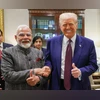
Friday, Feb. 14, 2025, Prime Minister Narendra Modi during a meeting with US President Donald Trump at the White House, in Washington, DC, USA. (Photo: PTI)
TNC Rajagopalan
3 min read Last Updated : Feb 17 2025 | 12:20 AM IST
The immediate reaction to the Trump-Modi meet in Washington is one of relief that any proposals for imposition of India-specific tariffs by the United States are on hold for the moment. President Trump has asked his advisers to deliver reports on the steps to be taken to achieve reciprocal trading status i.e. charging on goods from different countries the same tariffs that they charge for import of goods from the US. How this policy will affect India-US trade relations will possibly become clear in the coming weeks. For now, some contentious issues between the two countries, other than trade and immigration, have receded to the background.
 
Prime Minister Modi did well to visit the US within weeks of Trump taking over as the President. He is only the fourth leader of a country, after Japan, Israel and Jordon to meet Trump in his second term to discuss a range of issues including tariffs, illegal immigration, defence co-operation and technology transfer. Before the visit, the government had cut import duty rates on some items of interest to the US, such as motor cycles. The willingness to take back illegal immigrants from India had also been conveyed. The statements of Trump and Modi after their meeting on Thursday now raise hopes of the India-US relations moving to a higher level in the coming years. The leaders set a target of more than doubling bilateral trade to $500 billion by 2030 and asked their teams to work on early conclusion of a mutually beneficial trade agreement. They agreed to strengthen the oil and gas trade and increase cooperation in the direction of small modular nuclear reactors. India may acquire sophisticated military hardware, artificial intelligence chips, semiconductors, biotechnology and other technologies from the US. Such imports of high value items and technologies may reduce India’s trade surplus with the US, addressing one of the principal demands of Trump. 
 
However, what shape the principle of ‘reciprocal tariffs’ will take is unclear. Most countries in the world adopt the ‘most favoured nation’ (MFN) principle i.e. the principle of non-discrimination by charging the same tariffs on imports from all countries. For example, India charges the notified import duty rate for any item regardless of the origin of the goods, except where the import is under a preferential or free trade agreement. A recent working paper prepared by the researchers at the World Trade Organisation (WTO) found that almost 80 per cent of global trade is conducted on MFN trading principle. The US can end up with a very complicated import duty rate structure if it imposes different duty rates on the same item based on the origin of the goods. It would be difficult to implement such a policy with complexities involved in determining the origin of the goods. Also, futile issues could arise when the items of imports by any country from the US are different from the items of imports by the US from that country.
 
Trump is known for flip-flops as he demonstrated while suspending the 25 per cent tariff on goods from Canada and Mexico he imposed two days earlier. Quite often, his statements and even actions are intended to take a tough negotiating position. So, it wouldn’t be a surprise if his idea of ‘reciprocal tariffs’ is also given only a ceremonial ingress before abandonment. 
 
Email : tncrajagopalan@gmail.com

One subscription. Two world-class reads.

Already subscribed? Log in

Subscribe to read the full story →
*Subscribe to Business Standard digital and get complimentary access to The New York Times

Smart Quarterly

₹900

3 Months

₹300/Month

SAVE 25%

Smart Essential

₹2,700

1 Year

₹225/Month

SAVE 46%
*Complimentary New York Times access for the 2nd year will be given after 12 months

Super Saver

₹3,900

2 Years

₹162/Month

Subscribe

Renews automatically, cancel anytime

Here’s what’s included in our digital subscription plans

Exclusive premium stories online

  • Over 30 premium stories daily, handpicked by our editors

Complimentary Access to The New York Times

  • News, Games, Cooking, Audio, Wirecutter & The Athletic

Business Standard Epaper

  • Digital replica of our daily newspaper — with options to read, save, and share

Curated Newsletters

  • Insights on markets, finance, politics, tech, and more delivered to your inbox

Market Analysis & Investment Insights

  • In-depth market analysis & insights with access to The Smart Investor

Archives

  • Repository of articles and publications dating back to 1997

Ad-free Reading

  • Uninterrupted reading experience with no advertisements

Seamless Access Across All Devices

  • Access Business Standard across devices — mobile, tablet, or PC, via web or app

Topics :Donald TrumpBS Opinion

Next Story



