By Andreas Kluth
As the presidents of the United States and China prepare to meet on the sidelines of an economic summit in South Korea — an encounter that may not actually happen — some foreign-policy strategists in Washington are not just worried but aghast. The two mightiest nations on Earth seem hell-bent on waging economic war up to and including “mutual assured destruction.” And at least one of the pair seems to have no plan, no expertise and no clue.
“The first thing to understand is that there is no China policy” in the current US administration, Rebecca Lissner told me. She was a top adviser to Vice-President Kamala Harris and would now be in the National Security Council if Ms Harris had won the 2024 election.
The Trump administration has no coherent strategy towards China, and the “trade stuff is worse than the markets believe,” I heard from Zack Cooper, a veteran Asia expert at the American Enterprise Institute. That must be bad indeed, because the stock markets have been see-sawing since April. One of his colleagues despairs over “nine months of policy whiplash” and a chronic case of “strategic schizophrenia.”
Attempting to summarise the chaos so far runs into the same limits of encapsulating, say, the story twists in Game of Thrones in one sentence. Roughly: Earlier this year, Donald Trump declared economic war on most of the world. Almost all countries sued for peace, but the most powerful, China, stared him down, matching tariffs on the way up (peaking at 145 per cent at one point) and on the way down (hovering around 30 per cent for a while). A few reversals, pauses and feints later, a new round of spikes is threatened for November.
But tariffs were just the overture, as Washington and Beijing, tit-for-tat, started going after each other in every other way. They’re slapping port fees on one another. They’re harassing each other’s tech companies — the US is squeezing Chinese firms that use American semiconductors; China has targeted America’s Nvidia, Qualcomm and others. Everything, it seems, is now a bargaining chip, as the Trump administration keeps reversing itself. One minute it bans the sale of microchips to China, the next it partially lifts the ban again. Adding to the confusion, Mr Trump has also thrown unrelated (and relatively trivial) matters into the mix, such as the fate of TikTok, a Chinese-owned video app.
One move has risen above the noise, however. Off and on, China has throttled, or threatened to stop, exports of rare earths, in which it has a global quasi-monopoly. This was entirely foreseeable — and yet seemed to take the Trump administration by surprise. Some of these 17 elements (which aren’t that rare, just very difficult to mine) are essential to make, say, the magnets that go into modern electronics, including those inside American cars and fighter jets.
Graham Allison at the Harvard Kennedy School, a doyen among international-relations scholars, concludes that “in the game of supply chain poker, China holds the high cards” and Mr Trump has come to realise that he doesn’t. Mr Cooper, at AEI, disagrees. “I don’t think the Chinese have all the cards,” he told me; “we have cards, we just haven’t been willing to play them.” For example, the US could cut Chinese banks out of dollar transactions in global financial markets, which is in its context as asymmetric as blocking exports of rare earths.
One problem is that the White House has recently fired a lot of the China experts who have the deep technical knowledge to find and use such levers. One example is David Feith, who was purged for political reasons just as the confrontation with China heated up.
Another problem is that Mr Trump’s remaining advisers are at one another’s throats over what the US even wants out of China. Ryan Fedasiuk at Georgetown University describes three main camps: The economic nationalists love tariffs for their own sake. The hard-power realists care more about keeping China inferior to the US technologically and militarily. The transactional restrainers view tariffs and other measures merely as tools to extract concessions, such as a Chinese clamp-down on the chemicals used to make fentanyl. Meanwhile, Mr Trump seems to be all over the map.
That’s what it means to have no strategy. The Trump administration has not answered, or seemingly even asked, fundamental questions, small or large, specific or general: Does the US want to attract Chinese investment, or to decouple the two economies? Does it want to sell its best semiconductors and software, or to hog them?
More broadly, does America want to keep China down, or share with it the burden of restoring order and peace in the world, from Ukraine to the Middle East? Is Taiwan (or the South China Sea, for that matter) a vital American interest to be defended, or a mere bargaining chip? Is China an adversary the US will have to fight and defeat one day, or a difficult but unavoidable partner?
By the time the top guys take a seat at the same table, Ms Lissner told me, “you don’t have the luxury of saying, we’re going to do trade, but not Taiwan, or we’re going to do fentanyl, but not the Philippines. That’s just not how it works.” The result is what she calls ADD diplomacy — negotiating with attention deficit disorder, in pursuit of no clear goal and guided by no compass.
“I just don’t think that the Trump folks believe you need a strategy to do things,” Mr Cooper told me. Their narrative, he says, is that Trump is a “master negotiator, walks into the room, decides where he has leverage, uses it and walks out.” The problem is that the Chinese have prepared for this showdown for a long time, and their rare earths are just the start. They believe, Mr Cooper says, that they’re “running circles around the Trump team. They feel really confident.”
If the meeting in South Korea doesn’t happen, the Chinese will blame it on logistics. If it does happen, it’s unlikely that anything big will be resolved. There may be a tariff reprieve here, or a corporate deal there. But as to the most important relationship in and for the world, that between the US and China, nobody will be any wiser.

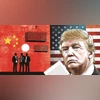 "Why the Donald Trump administration's China approach lacks direction")


 Connect with us on WhatsApp