3 min read Last Updated : Oct 09 2023 | 10:40 PM IST
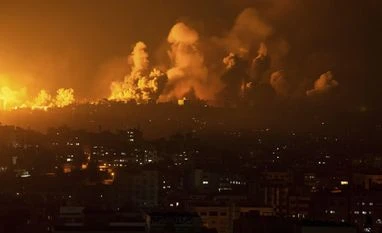
The unprecedented incursion into southern Israel by Gaza-based Palestinian militant group Hamas has shocked the world. It is still uncertain how many Israelis (and those of other nationalities) have been killed and how many are still being held hostage. The number for the former is likely in the hundreds. For a small country, the toll will be grievous. Some have pointed out that this will likely be the largest number of Jewish people killed in a single day since the Holocaust. Israeli administrations have traditionally believed in providing a disproportionate response to terrorist acts committed by Palestinian militants; there is every reason to fear that the besieged, blockaded, and disenfranchised people of the crowded Gaza Strip will be subjected to a humanitarian catastrophe following Hamas’ actions.
The primary responsibility for the mass murder and kidnapping of civilians must be with the perpetrators. Hamas long ago chose to retain its maximalist and terrorist vision for the Palestinian liberation struggle, as compared to other factions. Even in an open war, this would count as a brutal and counter-productive war crime. But there is enough blame to spread around. The Israeli government, led by right-wing populist Benjamin Netanyahu, must shoulder a great share of it. Mr Netanyahu, to appease his hyper-nationalist and fundamentalist coalition partners, has picked fights with the Israeli military and intelligence services. He has pushed Palestinians into a corner and denied them any hope of a two-state solution. The latter acts will have pushed Hamas into this spectacular act of terrorism; and the former may well have contributed to the intelligence and military failures that allowed the militants to penetrate dozens of kilometres into Israel for hours without warning or a military response on the ground.
The United States, as Israel’s security guarantor, has chosen to ignore the rights of the Palestinians for decades now, and has not bothered to rein in Mr Netanyahu’s excesses. Iran, which Hamas has said helped in the commission of this atrocity, continues to show itself to be unfit for the role of regional hegemon to which it aspires. And other regional powers, from India to Saudi Arabia to Turkey, have been shown the limits of a regional agenda that focuses on normalising relations with Israel without at all addressing the rights of the Palestinians.
The focus now must be on preventing an escalation of this conflict. Some response into Gaza is inevitable. But a wider conflagration that draws in Lebanon or even Iran must be avoided. India too has a stake in ensuring that a semblance of stability returns to the region in short order. Not only is the price of oil already above the comfort zone for India, but it has just announced participation in grand infrastructure schemes in West Asia. The India-Middle East-Europe Corridor, or IMEC, depends on secure ground links between ports in the United Arab Emirates and ports in Israel. A breakdown in relations between the Arab states and Israel or a prolonged conflict on Israel’s borders will render such plans inoperable. India must retain a balanced and agile approach to the immediate problem, while also retaining a long-term perspective. There will be no peace to India’s west unless both Israel and the Palestinians compromise.