Home / Opinion / Editorial / Faltering ties with US drive deeper bilateral ties between India, Japan
Faltering ties with US drive deeper bilateral ties between India, Japan
Modi's Tokyo visit boosts India-Japan ties with 21 pacts, $67 bn investment push, and deeper cooperation amid US trade tensions and Indo-Pacific challenges
premium
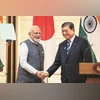
PM Narendra Modi and Japanese PM Shigeru Ishiba (Photo: Reuters)
3 min read Last Updated : Aug 31 2025 | 9:42 PM IST
With 21 pacts signed during Prime Minister Narendra Modi’s two-day visit to Tokyo for the 15th annual summit, India and Japan have signalled a significant deepening of bilateral ties in the context of the geopolitical challenges emerging from across the Pacific. An indirect validation of the impulse to do so for both countries emerged hours after Mr Modi’s meeting with his Japanese counterpart, Shigeru Ishiba, with American President Donald Trump reportedly dropping plans to visit India for the Quad summit later this year. This informal security partnership of the United States (US), India, Japan, and Australia was once considered a bulwark against China’s rise in the region, and Mr Trump had been its enthusiastic advocate in his first term. Recent assessments in Japan and Australia, however, suggested that the White House had chosen to put the arrangement in the deep freeze.
Their deteriorating trade relations with Washington have obliged both New Delhi and Tokyo to pursue countervailing relations, and the latest meeting in the Japanese capital provides strong signals of a renewed reciprocal tilt. While the 50 per cent tariff imposed by the US on India, a part of which is ostensibly for buying oil from Russia, can be expected to impose costs on economic growth, Japan’s trade deal with Washington, too, has run into problems. Last week Japan’s top trade negotiator cancelled a trip to the US owing to glitches in the US-Japan trade deal. These principally concern higher tariffs on Japanese automobiles and a controversy over a $550 billion investment package by Japan in return for lowering tariffs on Japanese imports. The US President’s presentation of the investment package as “our money to invest as we like” has not played well with public opinion in Japan. It is noteworthy that Japan resumed crude oil and gas imports from Russia’s Sakhalin-2 project in June this year, after a two-year hiatus.
The broad point, therefore, is that with the US increasingly being viewed as an adversary, India and Japan are seeking to extract as much shared benefit from a relationship that has always been cordial and constructive. The key element of the 15th summit is the change in tonality on the Japanese side. Since the 1950s, India has received considerable assistance from Japan for infrastructure (such as Delhi Metro), urban development, and livelihood improvement. The Japan International Cooperation Agency has been India’s development partner. But the latest set of agreements suggests that it is Tokyo that has become more forthcoming in expanding the ambit of engagement with New Delhi. This is especially evident in the economic agreements that seek to establish closer business-to-business ties. These include a private-investment target of 10 trillion yen ($67 billion) from Japan, initiatives to foster collaboration between small and medium enterprises, and the establishment of business forums between India and the two regions of Kansai and Kyushu, both key economic hubs, with the latter being a strategically vital centre for the automotive and semiconductor industries. Economy-oriented security-cooperation agreements have been no less consequential — including in promoting supply-chain resilience in strategic sectors. For both countries, this hedging of geopolitical strategies is also critical in view of the Shanghai Cooperation Organisation Summit, at which Chinese President Xi Jinping appeared keen to project a China-led global power grouping as an alternative to the Washington Consensus.




