3 min read Last Updated : Aug 19 2025 | 10:58 PM IST
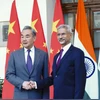
Chinese Foreign Minister Wang Yi’s two-day visit to India, a visit coming after three years, is being viewed as signs of a thaw in Sino-Indian relations, which have been frozen since 2020 following the People’s Liberation Army’s incursions along the Line of Actual Control (LAC) in eastern Ladakh. But the visit, which includes talks with Foreign Minister S Jaishankar and another round of boundary negotiations with National Security Advisor Ajit Doval, also needs to be viewed against the American President’s trade wars and the impending deadline for the United States (US) to impose an additional 25 per cent tariff on India for buying Russian crude oil. Where Mr Jaishankar’s opening remarks spoke of “three mutuals — mutual respect, mutual sensitivity, and mutual interest”, Mr Yi was more candid. According to a statement from the foreign ministry in Beijing, he spoke of how both nations needed to expand cooperation amid “overwhelming bullying” and severe challenges to free trade.
The Chinese minister was expansive about deepening ties, declaring that the setbacks they faced in the past few years were not in China’s interests. Following an agreement at the Kazan Brics summit late last year, the two armies have disengaged in key friction points and withdrawn from four major disputed spots, ending the four-year standoff. Building on Foreign Secretary Vikram Misri’s productive visit in January, the two sides have moved to extend the normalisation of relations. The Mansarovar Yatra has been resumed after five years. India has restarted visa service for Chinese visitors and is discussing ways to open border trade through designated passes. Mr Yi assured his Indian counterpart that China would resume much-needed supplies of fertilisers, rare-earth minerals, and tunnel-boring machines. Mr Yi also met Prime Minister Narendra Modi on Tuesday. Mr Modi will be visiting China for the first time in seven years — to attend the Shanghai Cooperation Organisation summit in Tianjin on August 31.
This diplomatic choreography between New Delhi and Beijing is encouraging, but demands dispassionate realism. With the US and China agreeing to extend their tariff truce, which ended on August 12, for 90 days, the state of play between the world’s two largest economies is open-ended. A thaw between Beijing and Washington could well realign equations for New Delhi. China’s own actions suggest this possibility. In 2014, for instance, the PLA intruded along the LAC in Ladakh during Xi Jinping’s first state visit to India. Less than six months after Mr Misri’s breakthrough visit to Beijing, Apple vendor Foxconn had to withdraw 300 Chinese engineers from its Indian iPhone facility ostensibly as part of China’s efforts to curb technology transfer and labour exports to India. This episode underlines that cooperation with China is desirable but given Beijing’s unpredictability, India must balance its dependence economically. India already runs an overwhelming deficit with China of the order close to $100 billion and is heavily dependent on it for raw material for its successful generic drug industry, and rare earths and solar cells for its electric automobile and solar power industries. Equally, New Delhi must secure its interests in the Indian Ocean and with its Asian neighbours. Signing on to the 11-country Comprehensive and Progressive Agreement for Trans-Pacific Partnership, which China rejected last year, would be a good first step to ensuring India’s economic and geopolitical interests remain secure.