The appointment of Sergio Gor, White House personnel chief, as United States ambassador to India and special envoy on South and Central Asian affairs, subject to Senate confirmation, has presented New Delhi with a new set of challenges to navigate vis-à-vis its fraught relations with the Donald Trump administration. The appointment is remarkable for several reasons and demands a cautious response from the Indian government. First, Mr Gor, 38, has no diplomatic or overseas experience that would have made him an automatic choice for a posting in a country of the size and complexity as India. His rise to prominence in the Trump White House has been on the back of backroom manoeuvring with several prominent Republican politicians before he chose to align himself closely with the Maga (“Make America Great Again”) faction. One of President Donald Trump’s earliest backers in his presidential bid, Mr Gor managed a political action committee and published his promotional books. This unwavering loyalty yielded considerable backroom power in the Oval Office, where he was responsible for background checks and security clearances for key federal appointments. As such, he is known to have the ear of the President and senior politicos within the administration treat him with circumspection.
Second, given that Foreign Minister S Jaishankar said he had “read” about the appointment and declined to comment on ambassadorial appointments of other countries in public, it is probable that the established diplomatic conventions regarding Mr Gor’s appointment have not been observed. Most countries negotiate an approval by a country to receive a diplomat from another state. This exercise is generally considered fundamental to diplomatic relations between countries. In this instance, the omission of this practice is particularly concerning since Mr Gor’s brief also covers South Asia and Central Asia, a position that will be problematic for New Delhi. This expanded responsibility not only indicates a new way of hyphenating India and Pakistan, the designation also raises the prospect of US meddling in India’s relations with its neighbours, including Bangladesh, Nepal, Sri Lanka, and Bhutan.
In 2009, India had rejected a designation for Richard Holbrooke as US special envoy for India and Pakistan under the Obama administration. Subsequently, Mr Holbrooke was redesignated US special representative for Pakistan and Afghanistan and focused on the Af-Pak policies of the US administration, though he did occasionally consult India, given New Delhi’s role in Afghanistan’s reconstruction at the time. All told, Mr Gor’s appointment cannot be viewed with equanimity. Given the manner in which it has been made, the expanded ambit of responsibility, and the maverick background of the candidate himself, it carries no reassurance that Indo-US relations will move back on track soon.

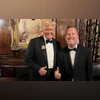 "Maverick diplomacy: The US ambassador's appointment is problematic")












 Connect with us on WhatsApp