The swiftness in identifying the cause of the Odisha train accident, which resulted in the death of over 270 people, offers the Indian Railways an opportunity to address the problem quickly. As is mandatory, the Commission of Railway Safety (CRS) will conduct an investigation and recommend ways to improve secure travel and prevent a repeat tragedy. The CRS is a statutory body and, significantly, operates independent of the Railway Board. Pre-independence, the Railway Inspectorate, as the CRS was then known, was placed under the Department of Posts and Air. Re-designated to its current name in 1961, it comes under the administrative control of the civil aviation ministry. This brief history is important to establish the traditional institutional independence of this body from the executive functions of the Railway Board. Given this convention, it is difficult to understand why the Railway Board has recommended a parallel investigation by the Central Bureau of Investigation (CBI).
The Railway Board is seeking CBI intervention because it seems to suspect sabotage of the electronic signalling system, causing one train to travel at top speed down a track on which a loaded goods train was stationed. This is at odds with Railway Minister Ashwini Vaishnaw’s statement on Sunday that the cause of the accident was the failure of an electronic interlocking system and that responsibility for the problem had been fixed. If the minister’s statement was correct, then it precludes the need for the CBI to investigate. But the Railway Board now apparently suggests that the signal failure could have been the result of sabotage rather than human error. Assuming this suspicion is valid, the CBI as a criminal investigation body and staffed with policemen is unlikely to have the requisite technical knowledge to understand the complexities involved in electronic signalling systems. That expertise to distinguish between foul play and human error in the railway system lies with the CRS. Should its investigation reveal signs of sabotage, the government would be within its rights to take action on its own, without the intervention of the CBI.
The incongruous involvement of the CBI makes it hard to escape the conclusion that the government may be seeking a political solution to a very real technical weakness within the railway system. Near-misses owing to flaws in signalling systems on other sectors of the railway network have been raised in the recent past. Those incidents raise questions as to why the Railway Board, with the weight of all its technical expertise, did not focus on fixing this serious threat to passenger safety on a war footing. Not surprisingly, Opposition parties have raised questions. This is, after all, the worst railway accident since 1995. What is needed, therefore, at this stage is a quick investigation by the CRS so that weakness in the railway system can be fixed as soon as possible. A parallel investigation by the CBI runs the risk of politicising the issue in an election year. This is the last thing Indian Railways and those who depend on it need at this stage.

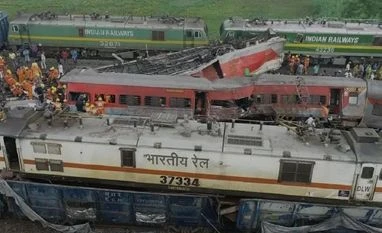 "Off track at Balasore")












 Connect with us on WhatsApp