The announcement of achieving the E20 fuel, or a 20 per cent ethanol blend in motor fuel this year, five years ahead of schedule, and the intention to move beyond to E27, must be welcomed at a time when greenhouse-gas (GHG) emission has been sharply rising thanks to India’s thermal-power plants, and urban pollution is becoming a nationwide health crisis. E20 is a viable means of aligning with India’s “nationally determined contribution” to reach “net zero” by 2070 and reducing the country’s dependence on imported crude oil. The government data shows that from ethanol supply year (ESY) 2014-15 (when the ethanol blend was just 1.5 per cent) to ESY 2024-25, state-owned oil-marketing companies saved more than ₹ 1.44 trillion of foreign exchange, accounting for crude-oil substitution of 245,000 tonnes and a reduction in carbon-dioxide emission roughly equivalent to planting 300 million trees. According to a NITI Aayog study, the life-cycle emissions of GHGs in the case of sugarcane- and maize-based ethanol are, respectively, 65 and 50 per cent less than that of petrol. Ethanol production can also bring significant benefits to farmers by creating a reliable market for maize, sugarcane, and rice straw. With this, India joins an exclusive club of Brazil, the United States (US), and European countries in blending ethanol with petrol.
From the consumer point of view, the transition needed better management. Although E20 has been available in select fuel stations, it has now become the only choice in nearly 90,000 stations across the country. Not unexpectedly, this has caused widespread consternation about the efficacy of E20 in terms of mileage and acceleration. In Europe and the US, motorists are given a choice of tanking up on E10, E15, or E20, depending on the age of their vehicles. In fact, in 2020, the Society of Indian Automobile Manufacturers said E10 must be provided alongside E20 to ensure an optimal operation of vehicles. It pointed out that changing items such as rubber parts and gaskets would be a major operation. In India, most car engines are calibrated for E10; only those produced after April 1, 2025, are designed for E20. Automakers initially hinted at performance-related issues. Now, they appear to have fallen in line with the government’s views, reassuring consumers that the differences in performance parameters are minor. This variability of industry opinion is unlikely to assuage concerns.
In the long run, though the broader benefits of biofuel in terms of air quality and farmer incomes may outweigh the immediate transition pangs, there are unintended consequences embedded in this policy. One is the “food-versus-fuel” debate since returns for farmers from biofuel crops can often be better than from agricultural crops. Maize prices, for instance, rose from ₹ 1,800 a quintal to more than ₹ 2,500 a quintal in two years owing to biofuel demand. This has undoubtedly enhanced farmers’ income but has had a knock-on effect on prices of poultry- and cattle-feed (which consume 70 per cent of maize production) and diversion of land from millet and oilseed cultivation. Besides, the cultivation of rice and sugarcane, other kinds of biofuel feedstock are extremely water-intensive; their expansion in areas such as Punjab, Haryana, and Maharashtra can be catastrophic for India’s water security. Balancing these competing options demands an appropriate response mechanism from the government to ensure that food and water security is not sacrificed at the altar of energy security.

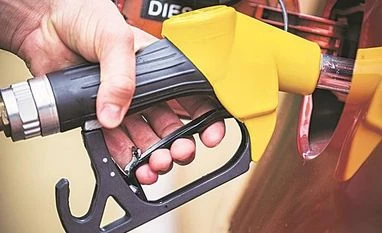 "Ethanol blending for fuel a welcome move, but transition challenges remain")












 Connect with us on WhatsApp