Home / Politics / Zero corruption, no to religion-based quota: PM outlines 11 resolutions
Zero corruption, no to religion-based quota: PM outlines 11 resolutions
In the eighth resolution, the prime minister assured that reservations granted to marginalised communities would not be taken away and strongly opposed any attempts to introduce religion-based quota
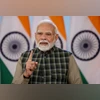
The prime minister called for collective efforts to fulfil these resolutions. | File Photo: PTI
Prime Minister Narendra Modi on Saturday proposed 11 resolutions which include upholding existing reservations for marginalised sections but strongly opposing any religion-based quota.
Replying to a two-day debate in Lok Sabha on the 'Glorious Journey of 75 Years of the Constitution of India', Modi said the Constituent Assembly had decided against religion-based reservations after a thorough discussion, and alleged the Congress is now promising it to appease its vote bank.
The 11 resolutions proposed by Modi towards the end of his over 110-minute speech also included a call for an end to dynastic politics, promoting meritocracy over nepotism in governance and a pledge for having zero tolerance to corruption.
The prime minister said these resolutions are aimed at shaping India's future.
But Congress leader Priyanka Gandhi Vadra and Samajwadi Party leader Akhilesh Yadav termed the 11 resolutions "hollow and fake promises." "Today, we heard resolution of 11 'jumlas'. Doubling the income of farmers was jumla, providing one crore jobs was a jumla, Agniveer scheme and GST are also a jumla," Yadav said.
The prime minister emphasised that these resolutions should guide both citizens and the government in building a stronger and more inclusive nation.
He said that collective efforts and commitment to constitutional values were essential for national progress.
The first resolution asks every individual to perform their duties. "Be it individuals or the administration, everyone must adhere to their responsibilities," Modi said.
The second called for inclusive development across all regions and communities, encapsulated in the philosophy of 'sabka saath, sabka vikas'.
The third resolution is a pledge of zero tolerance towards corruption, underscoring the need for society to reject corrupt individuals. "There should be no social acceptance of those involved in corruption," Modi asserted.
The prime minister's fourth resolution was to instill pride in the country's laws and regulations among citizens, ensuring that they reflect the nation's aspirations.
The fifth resolution focuses on breaking free from colonial mindset and fostering pride in India's heritage and legacy.
Modi's sixth resolution called for an end to dynastic politics and promoting meritocracy over nepotism in governance.
The prime minister highlighted the importance of respecting the Constitution in the seventh resolution and urged that the guiding document should not be misused for political gains.
In the eighth resolution, the prime minister assured that reservations granted to marginalised communities would not be taken away and strongly opposed any attempts to introduce religion-based reservations.
The ninth resolution proposed by the prime minister envisioned India as a global example in women-led development, promoting gender equality and leadership.
The tenth resolution stressed on the mantra of national development through regional growth, emphasising the symbiotic relationship between state and national progress.
The eleventh and final resolution underscores the vision of 'Ek Bharat, Shrestha Bharat', fostering unity and national pride.
The prime minister called for collective efforts to fulfil these resolutions, aligning with the Constitution's foundational ethos of 'We the People'.
(Only the headline and picture of this report may have been reworked by the Business Standard staff; the rest of the content is auto-generated from a syndicated feed.)

 "Zero corruption, no to religion-based quota: PM outlines 11 resolutions")


 Connect with us on WhatsApp