As the lines between luxury and sustainability blur, Indian homebuyers are redefining indulgence.
Glass facades and air-conditioned enclaves are giving way to spaces that breathe — homes that reflect a deeper connection to nature, heritage, and well-being.
In this purposeful architectural shift, homes are as much about craftsmanship and ecology as they are about aesthetics. From terracotta-tiled roofs and mud mortar walls to koi ponds and eco pools, sustainable luxury is no longer niche. It’s the new aspiration.
In Vikramgad, Maharashtra, architect Malaksingh Gill’s project, Vedika, challenges the concrete norm. Built entirely by local hands, without cement or steel, the structure favours open windows over walls, with a wooden roof tiled in terracotta and unplastered brick walls laid in mud mortar. The result: A home that stays cool, and breathes naturally.
In Bengaluru, Sharanya Iyer, cofounder of architecture studio UMAI, has spent two decades bringing daylight and greenery back into urban homes. Her designs often include smartly placed courtyards and elevated “daylight windows” positioned above eye level, usually at 7 feet, to encourage natural lighting without compromising privacy. “When windows are at eye level, people tend to close them,” she says. “But above eye level, they stay open.”
Delhi-based ZED Lab, creating net-zero energy structures since 2009, has introduced thermal innovations like the “House Under Shadows,” a prototype that shelters an entire home under a second skin. This overarching facade shades rooms, balconies, and open areas. Combined with a secondary brick skin, it cuts energy consumption by up to 35 per cent.
Such techniques — thermal massing, passive cooling, strategic window placement, and cross-ventilation — help maintain indoor comfort while reducing reliance on artificial heating or cooling. The new wave of homeowners seeking such an intentional, conscious lifestyle includes mostly professionals in their 30s to 50s.
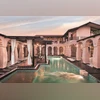
In smaller cities, where people are still closely connected to their roots, there’s a stronger appreciation for natural materials and vernacular techniques, says Shreya Srivastava, founder and principal architect, Studio Shunya. The studio’s project, Poetry in Stone (pictured above), spanning 15,000 sq ft in Bhilwara, Rajasthan, drew inspiration from traditional architecture. It’s mostly built using heat-absorbing stone and lime, with a central courtyard that has a swimming pool, which helps in cooling.
Sustainable luxury also includes chemical-free water features, bio-integrated systems, greywater recycling, and soil-based sewage treatment.
Biosphere Nature Pools, based in Coimbatore, Tamil Nadu, for instance, builds eco-friendly koi ponds, lagoons, and live bio pools that purify themselves. “Unlike traditional pools, these are living ecosystems,” says founder Vikash Kumar. “You can swim in them, consume the water, and never have to replace it.” Biosphere’s orderbook is full for the next six months.
Contrary to perception, sustainable homes don’t always cost more. Construction ranges between ₹4,500 and ₹8,000 per sq ft, comparable to premium urban homes. Double roofing can start at ₹300 per sq ft, while eco pools range from ₹7 lakh to ₹30 lakh, depending on size and complexity.
Challenges persist — skilled labour shortages, regulatory hurdles, material availability, and misconceptions about durability. “There’s still a belief that natural buildings are too rustic or experimental,” says Srivastava. “Approvals often involve additional documentation.”
Gill adds that the conversation needs to shift. “Yes, initial capital costs can be higher, but operational costs are significantly lower. And the long-term gains — in comfort, health, and savings — are undeniable.”