'Muskuraiye...'? Lucknow's tagline takes a hit amid transport woes

Overcrowded buses, weak feeder links and unchecked e-rickshaw growth push residents toward private vehicles
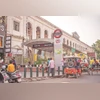
Lucknow
Meanwhile, Uttar Pradesh is preparing to roll out an artificial intelligence (AI) -based system aimed at reducing road accidents and improving enforcement efficiency through big-data analytics.
Virendra Singh Rawat Lucknow
6 min read Last Updated : Nov 16 2025 | 11:49 PM IST
Laxman, 42, travels 15 km each day from the outskirts of Lucknow to his office near the upscale Kapoorthala intersection, one of the busiest commercial hubs in Lucknow, Uttar Pradesh’s capital city. He avoids public transport, choosing instead to ride his  bike — a decision that has  nearly doubled his monthly travel expenses. 
He is content to spend the extra money for the convenience of saving time and avoiding the hassle of overcrowded, poorly managed, and traffic-prone public transport.
 
Laxman is not alone in preferring personal mobility over city buses. Surendra Singh, 40, commutes over 21 km daily from Jankipuram to Gomti Nagar, and like many others, chooses his bike instead of public transport. 
Lucknow’s tagline, “Muskuraiye, aap Lucknow mein hain!” (Smile, you are in Lucknow!), turns into an oxymoron when applied to its public transport system. Despite a population of nearly 5 million and multiple options — Metro, buses, autorickshaws, tempos, app-based cabs/bikes, and erickshaws — the city remains underserved in public transport. 
Lucknow’s public transport struggles with routine overcrowding, narrow and encroached roads, and low bus frequency on key routes, especially towards the outskirts. The city’s unchecked horizontal growth, rising population, persistent encroachments, and a suboptimal bus fleet have left many commuters preferring personal vehicles to save time and avoid inconvenience. 
Moreover, the city’s public transport system is further hampered by overlapping responsibilities across multiple agencies — police, municipal corporation, transport and urban development departments — with stakeholders often passing the buck, leaving citizens and tourists to bear the brunt. 
City buses 
Lucknow City Transport Service Limited operates a fleet of over 250 buses — both air-conditioned (AC) and non-AC, including low-floor and regular variants. Running under the central government’s flagship Jawaharlal Nehru National Urban Renewal Mission (JNNURM), the service is aimed at providing safe and environment-friendly transport for daily commuters such as office-goers, women, students, and senior citizens. Every day, the buses carry nearly 60,000 passengers, completing around 1,600 trips and covering about 50,000 km across the city. 
However, suburban areas such as Jankipuram — still not connected to the Lucknow Metro — remain underserved by public transport. With city buses often running overcrowded, residents are compelled to rely on personal vehicles or erickshaws, which mostly operate on feeder routes linking the main thoroughfares. 
In recent years, Lucknow has witnessed an explosion in the number of erickshaws, popular for their low fares and easy availability. While they provide a convenient option for short commutes, they also pose safety risks to passengers. Their largely unregulated growth has worsened congestion on busy routes. Estimates suggest the city has about 50,000 e-rickshaws, with authorities occasionally cracking down on illegal operators and issuing challans for traffic violations. 
Lucknow Metro 
Lucknow became one of the few Indian cities with a metro network with the start of commercial metro services in September 2017. Today, the system runs across more than 22.8 km with 21 stations and records an average daily ridership of about 85,000. Yet, the metro culture is still to take root in the city, held back by factors such as the absence of adequate feeder routes to stations and the perception of higher fares. 
College students and airport/railway passengers prefer the metro more than office-goers. 
On August 12, the Union Cabinet cleared another corridor for the Lucknow Metro — an 11.16-km line with 12 stations. Speaking to Business Standard, Lucknow Mayor Sushma Kharakwal said Defence Minister Rajnath Singh, the city’s Member of Parliament, had gifted this new line to further ease traffic congestion in the city. 
Meanwhile, the Lucknow Municipal Corporation (LMC) and the district administration are considering a series of reforms to ease road congestion. They have identified roadside eateries and pushcarts as major causes of traffic obstruction, while the unchecked rise of unauthorised erickshaws continues to pose safety hazards and contribute to road accidents. 
To improve public transport, new bus terminals are proposed along key highways — Hardoi Road, Sitapur Road, Rae Bareli Road, Ayodhya Road and Sultanpur Road — from where city buses can shuttle passengers, easing inner-city congestion. In addition, Lucknow is served by about 5,000 autorickshaws and roughly 2,000 app-based cabs and bikes (Ola, Uber, etc), which primarily cater to more affluent commuters. 
Passenger safety 
Safety concerns around public transport are raised routinely, with many vehicles lacking fitness certificates. To improve safety and transparency, all autorickshaws and e-rickshaws must now register with a QR code, enabling passengers — especially women — to verify vehicle and driver details. Besides, a WhatsApp chatbot is being developed to provide citizens with access to transport-related information, such as vehicle registration and driving license details. 
On occasions such as Raksha Bandhan, the Uttar Pradesh government allows women to travel free on state-run buses, underscoring the importance of public transport for women. This year, the Yogi Adityanath government extended the facility from August 8 to 10, with nearly 7 million passengers availing of it across the state. 
AI in traffic management 
Meanwhile, Uttar Pradesh is preparing to roll out an artificial intelligence (AI) -based system aimed at reducing road accidents and improving enforcement efficiency through big-data analytics. The initiative, which recently received formal clearance from the Ministry of Road Transport and Highways (Morth), will mark the first AI-driven road safety experiment undertaken by a state transport department in India, according to Transport Commissioner Brijesh Narain Singh. 
The pilot project will be executed at zero cost by state-run ITI Ltd in collaboration with global technology firm mLogica. For 2025-26, the state has allocated about ₹10 crore to support a wider data-driven administrative model for the transport department. Singh added that the department was rolling out a series of measures to enhance passenger safety, not only in Lucknow but across Uttar Pradesh. 
Recently, Rajeshwar Singh, the legislator from Lucknow’s Sarojininagar, submitted a proposal to the chief minister for implementing an AI-based Intelligent Traffic Management System (AI-ITMS). Citing challenges such as over 2.8 million registered vehicles, annual productivity losses of about ₹10,000 crore, and a 33 per cent rise in emissions, the proposal argued that AI could significantly improve traffic efficiency, emergency response, and environmental outcomes in the city. 
He emphasised that AI-enabled traffic systems could cut travel time by up to 25 per cent, reduce fuel consumption by 20 per cent, and improve ambulance response times by 40 per cent. 
 

One subscription. Two world-class reads.

Already subscribed? Log in

Subscribe to read the full story →
*Subscribe to Business Standard digital and get complimentary access to The New York Times

Smart Quarterly

₹900

3 Months

₹300/Month

SAVE 25%

Smart Essential

₹2,700

1 Year

₹225/Month

SAVE 46%
*Complimentary New York Times access for the 2nd year will be given after 12 months

Super Saver

₹3,900

2 Years

₹162/Month

Subscribe

Renews automatically, cancel anytime

Here’s what’s included in our digital subscription plans

Exclusive premium stories online

  • Over 30 premium stories daily, handpicked by our editors

Complimentary Access to The New York Times

  • News, Games, Cooking, Audio, Wirecutter & The Athletic

Business Standard Epaper

  • Digital replica of our daily newspaper — with options to read, save, and share

Curated Newsletters

  • Insights on markets, finance, politics, tech, and more delivered to your inbox

Market Analysis & Investment Insights

  • In-depth market analysis & insights with access to The Smart Investor

Archives

  • Repository of articles and publications dating back to 1997

Ad-free Reading

  • Uninterrupted reading experience with no advertisements

Seamless Access Across All Devices

  • Access Business Standard across devices — mobile, tablet, or PC, via web or app

Topics :Special NewsBS SpecialLucknow

Next Story


